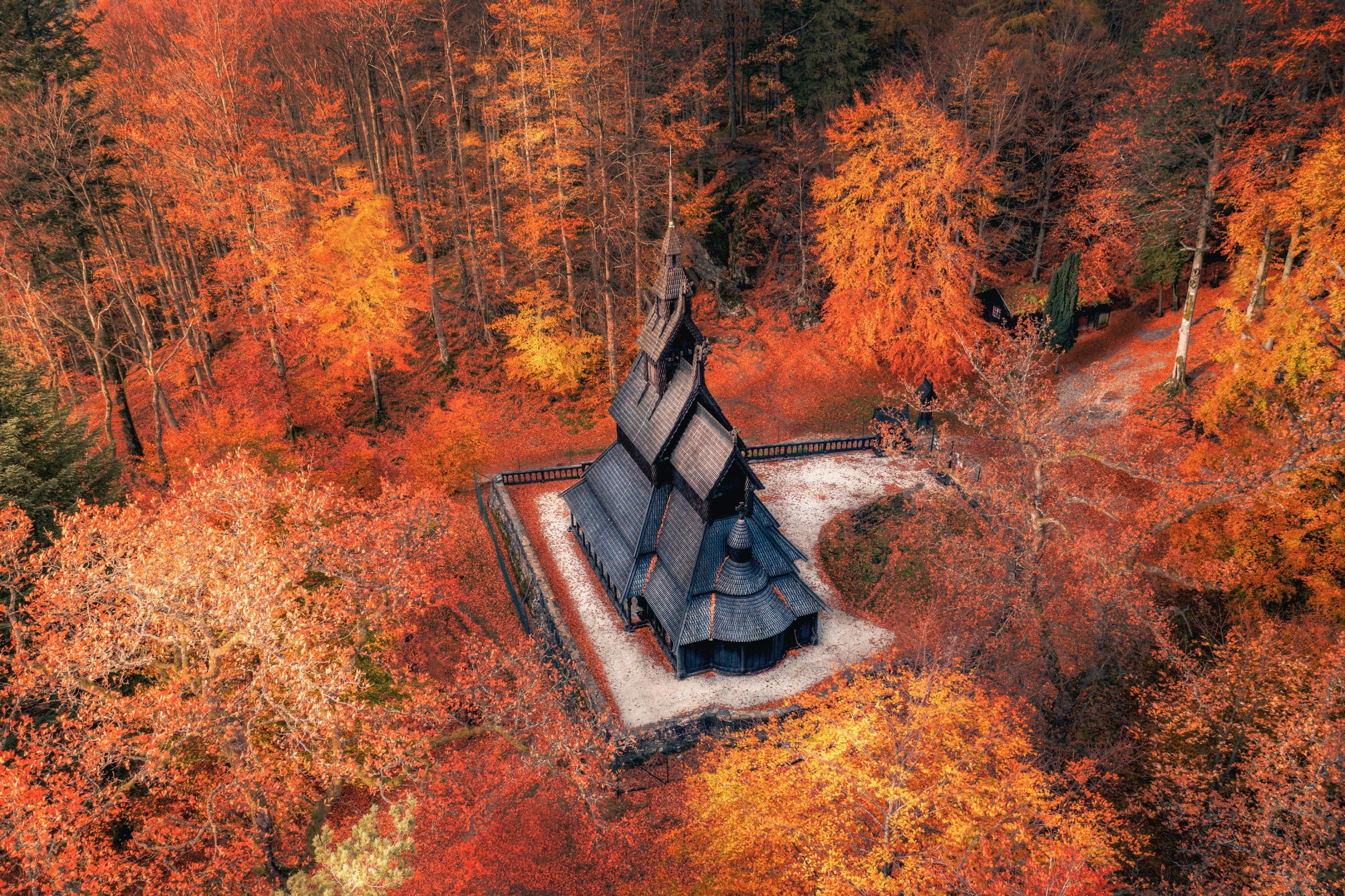
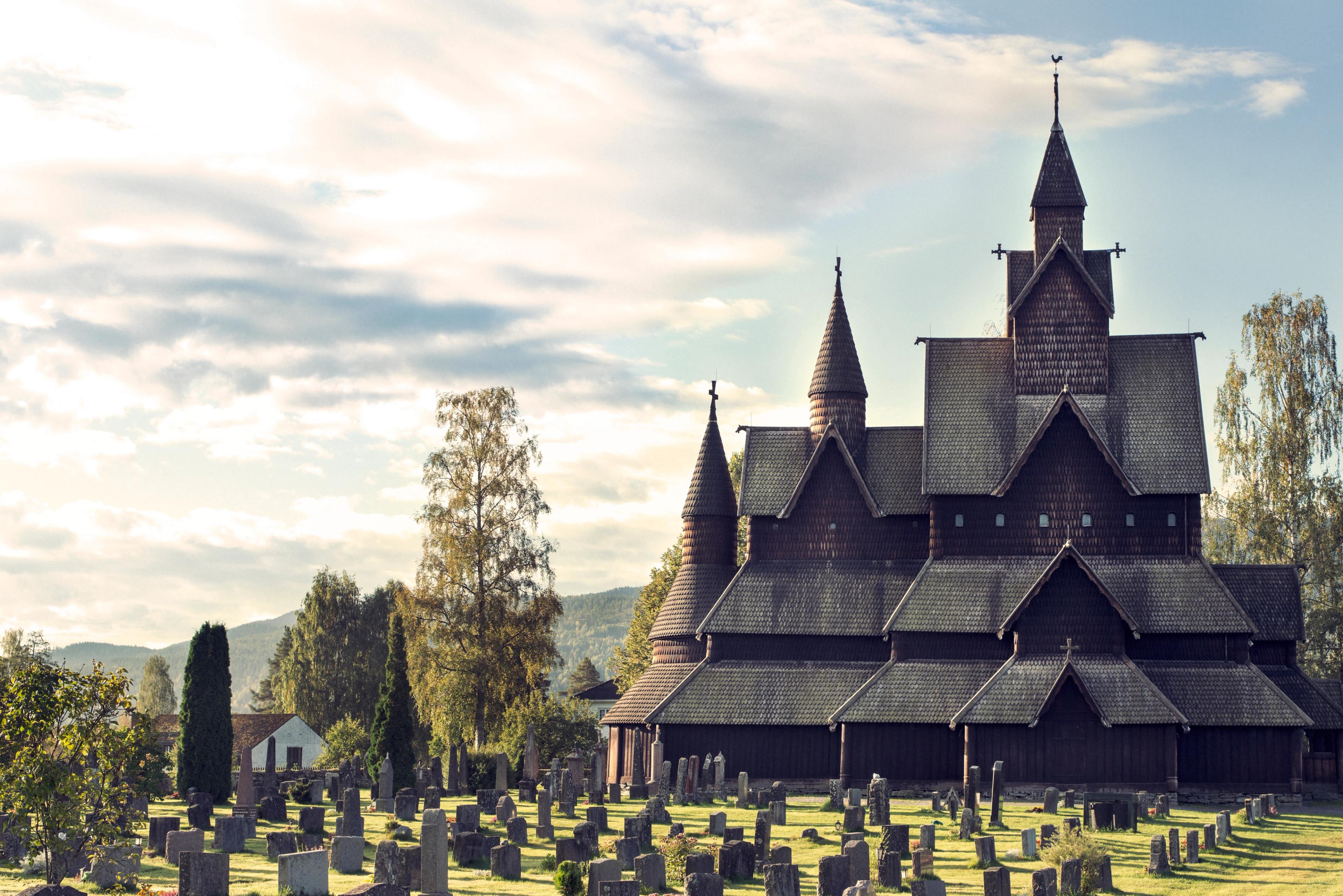
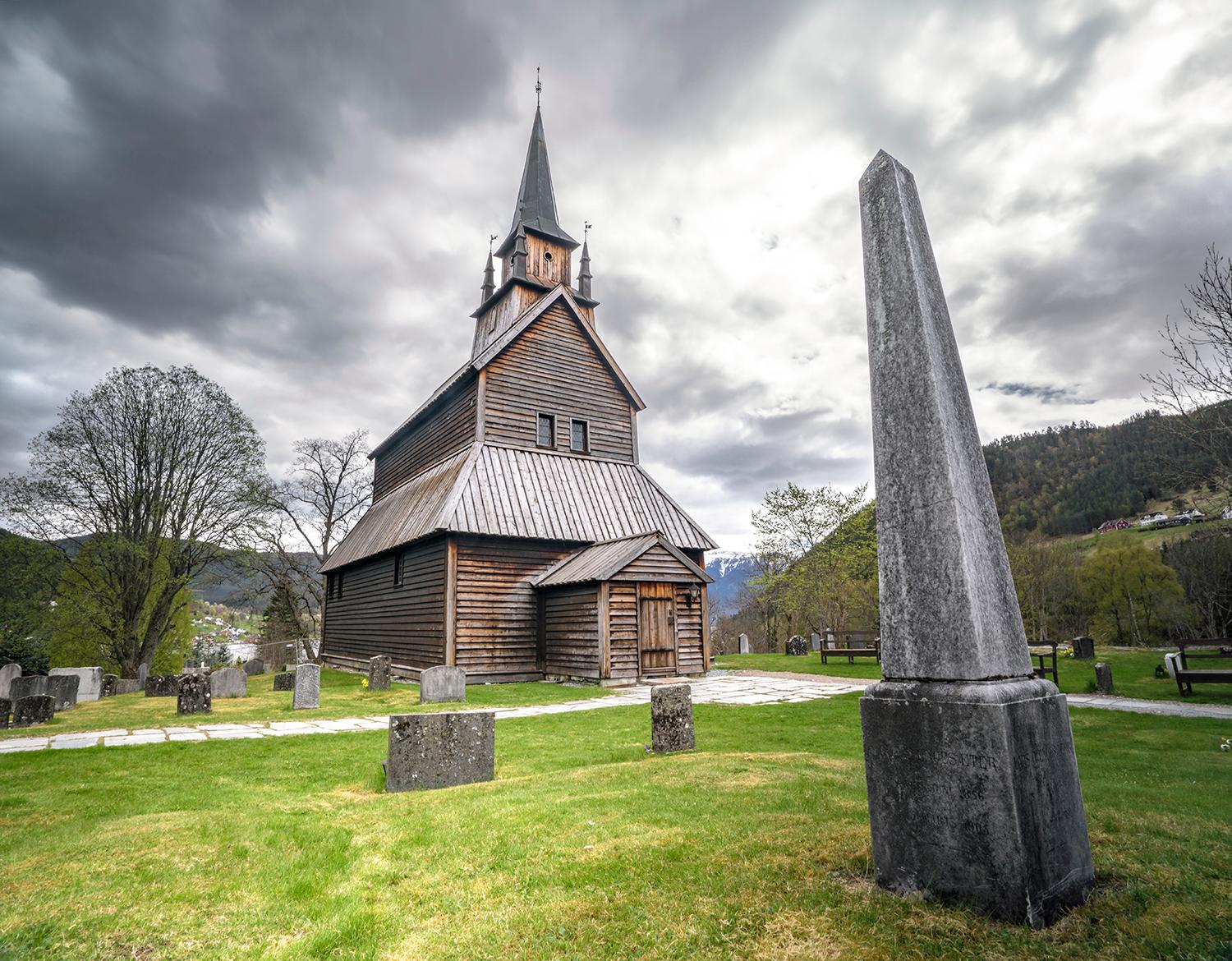
Le stavkirker norvegesi sono le chiese di legno più antiche del cristianesimo che si sono preservate fino a oggi. La maggior parte erano piuttosto semplici, mentre altre presentavano architetture complesse e intagli elaborati.
Stavkirker in Norvegia
Le chiese di legno medievali
Testimonianze di quasi 900 anni, scolpite nel legno.
Non c’è da stupirsi che queste splendide chiese continuino a incantare i visitatori.
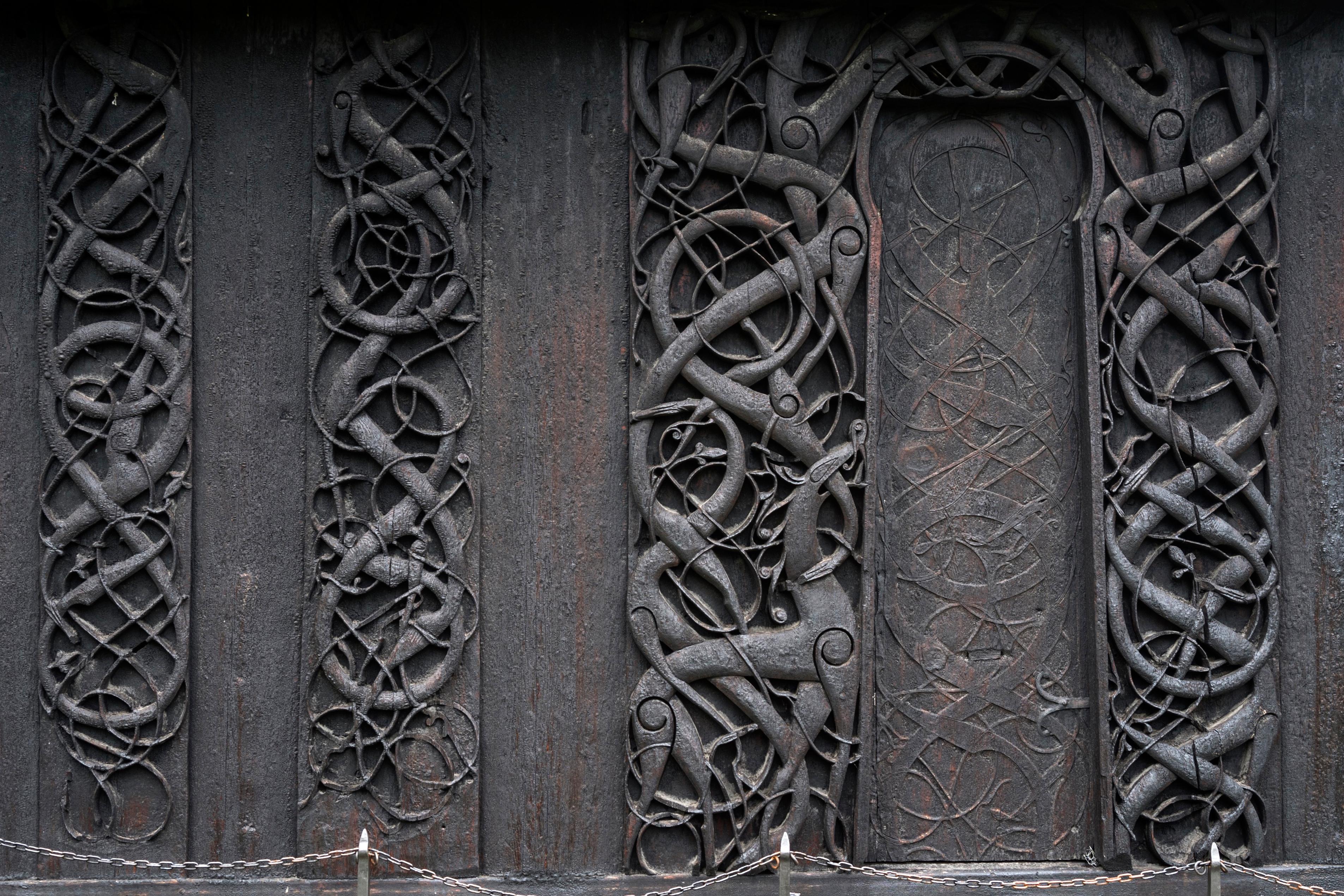
Prova soltanto a immaginare quanto tempo ci è voluto per creare tutti questi dettagli così finemente intagliati.
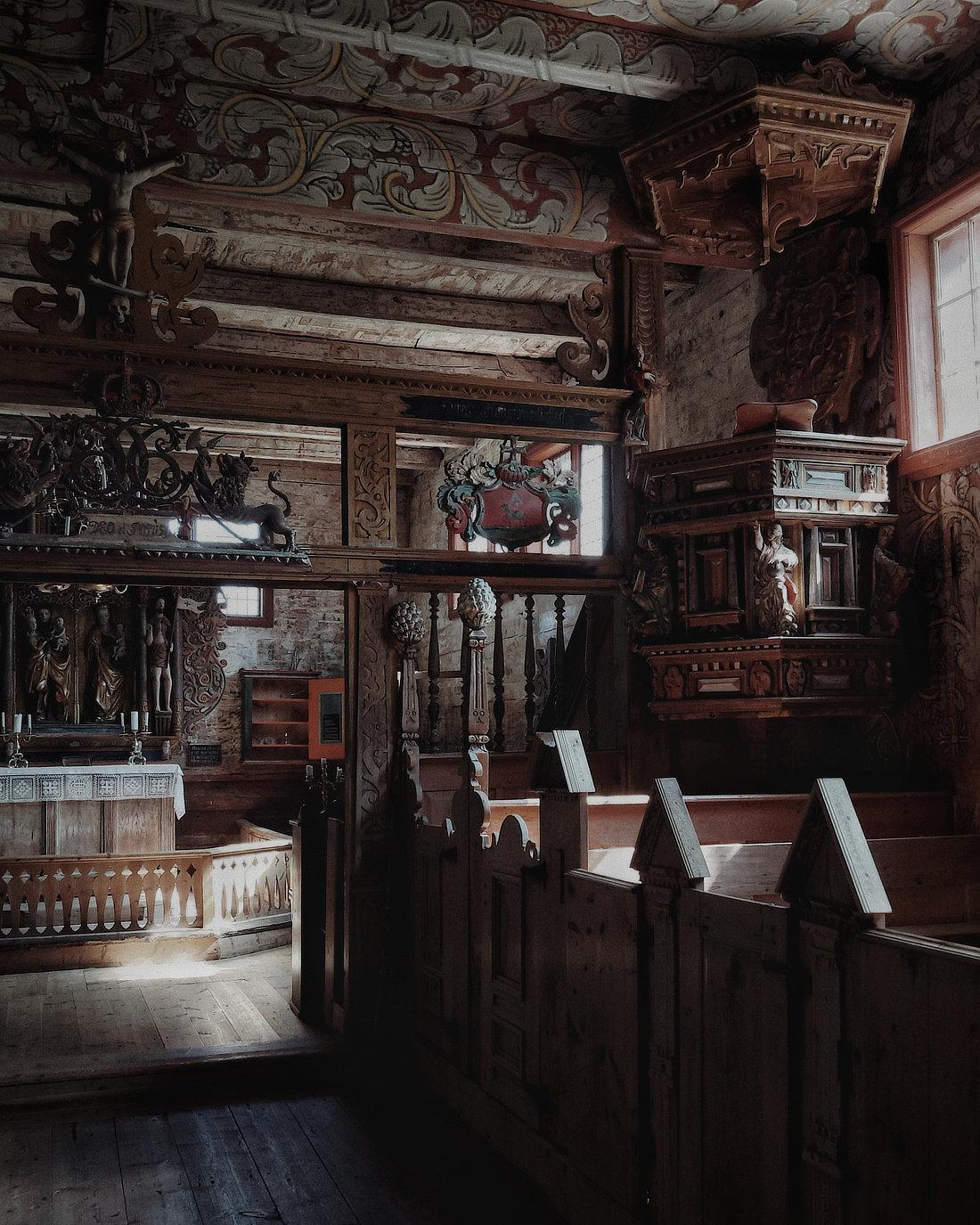
Respira l’odore del legno incatramato quando varchi la soglia e cerca i segni e simboli degli dei norreni, le antiche divinità che spesso nelle vecchie chiese coesistono con il Dio cristiano.
Una volta in Norvegia c’erano più di 1.300 di queste meravigliose costruzioni. Purtroppo scomparvero una dopo l’altra per far spazio a chiese più grandi, più calde e più moderne.
Grazie alla passione di un artista, le ultime 28 chiese vennero salvate appena in tempo.
Un’eredità vichinga
Durante il Medioevo in molte parti d'Europa vennero erette immense cattedrali di pietra. In Norvegia una tecnica simile fu utilizzata per le costruzioni in legno, sebbene in scala molto più piccola.
Le porte e i pinnacoli di legno delle chiese sono spesso splendidamente intagliati. Le decorazioni presentano un'interessante combinazione di motivi cristiani e di quelli che si suppone siano soggetti vichinghi pre-cristiani raffiguranti animali e draghi.
Le eccellenti tecniche costruttive in legno e le tradizioni di intaglio dei Vichinghi, utilizzate nella fabbricazione di imbarcazioni e case, vennero ulteriormente sviluppate e applicate anche alle stavkirker.
Ci sono tipi diversi di chiese di legno, ma la caratteristica che le accomuna tutte sono i pali angolari (“stav" in norvegese) e la struttura in legno con le assi portanti delle pareti che poggiano su longheroni. Appunto dal termine “stav” deriva il nome delle chiese, stavkirker.
C’è motivo di credere che molte di queste chiese di legno fossero erette su suolo sacro ai Norreni. Nei tempi antichi la fede dei popoli scandinavi non prevedeva un luogo di culto e le pratiche della religione norrena si svolgevano all’aperto nei boschi sacri, presso un altare o in uno hov pagano. Lo hov era spesso una grande stanza, o la sala del contadino più ricco del villaggio.
Dove si trovano le stavkirker
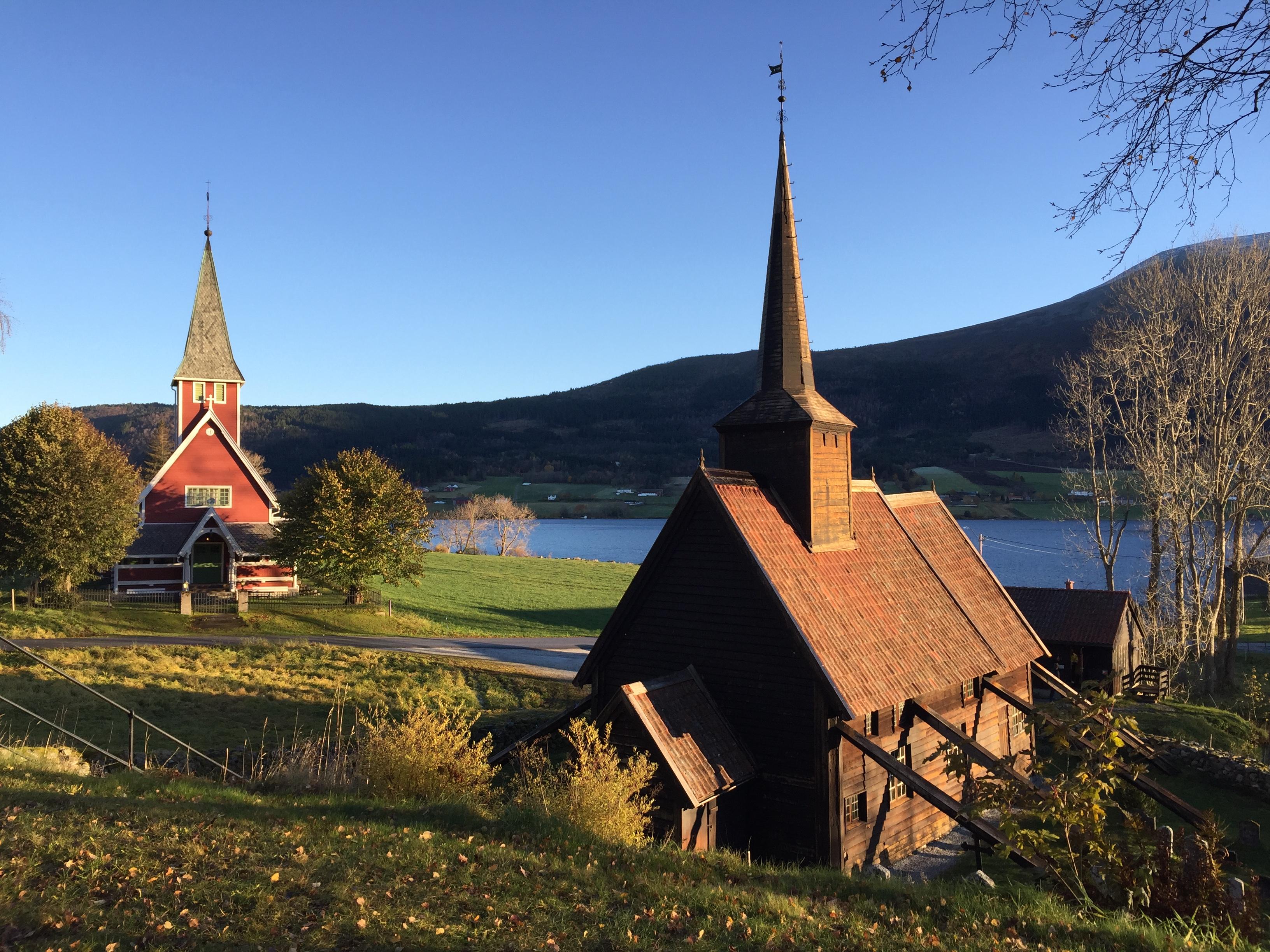
Una volta presenti in tutta la Norvegia, oggi sono rimaste soltanto 28 chiese di legno, piccole e grandi, in condizioni più o meno buone.
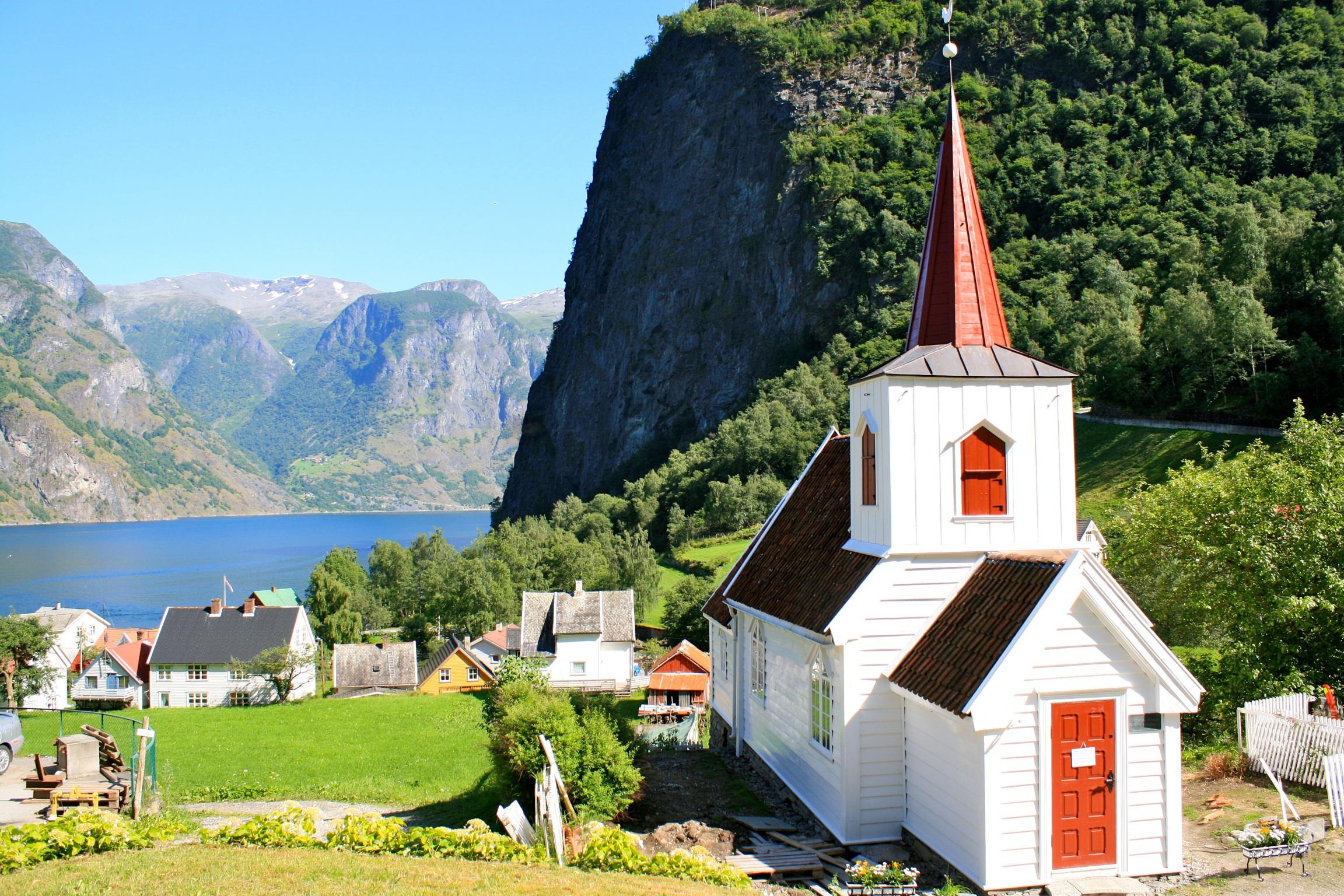
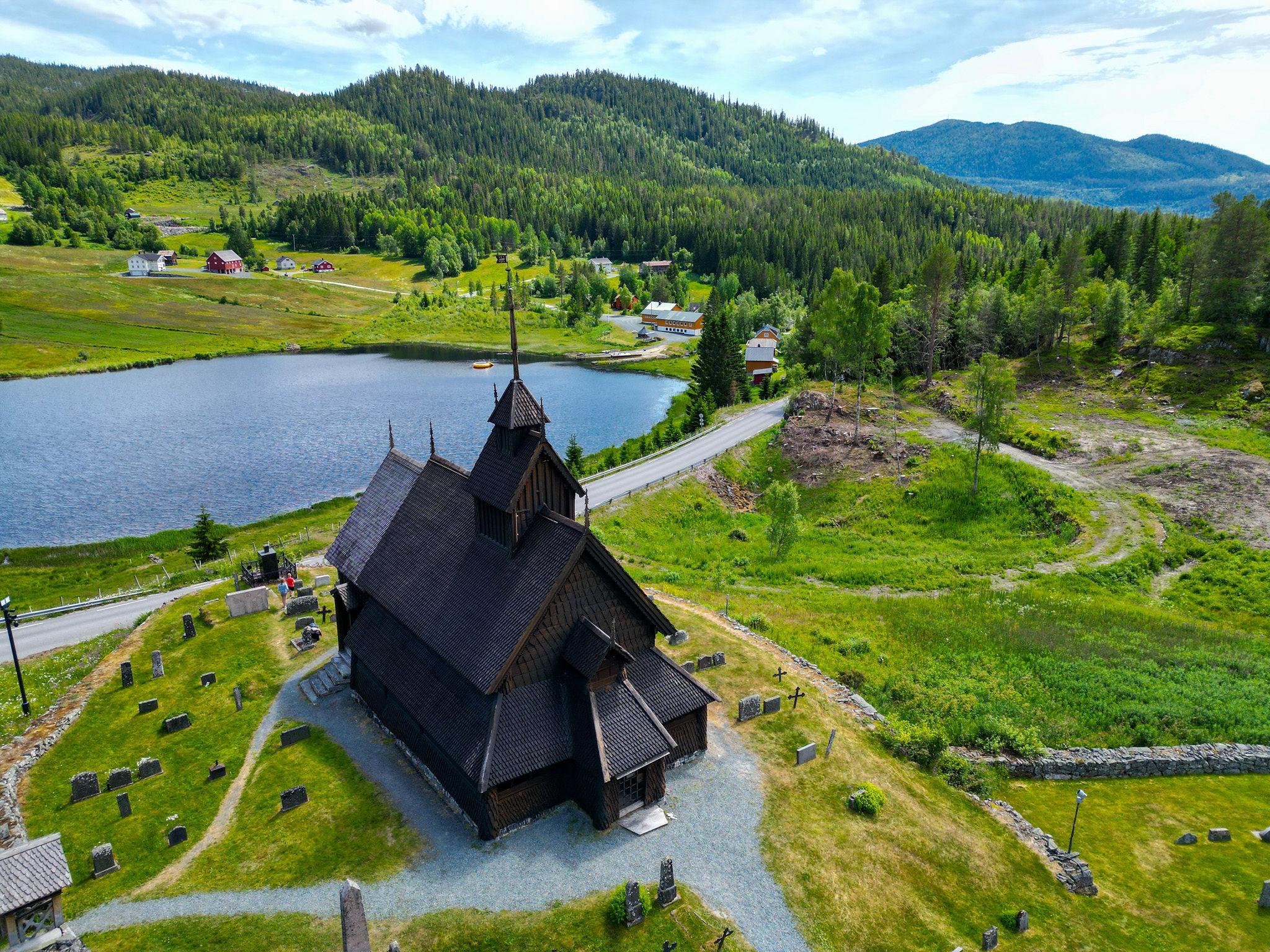
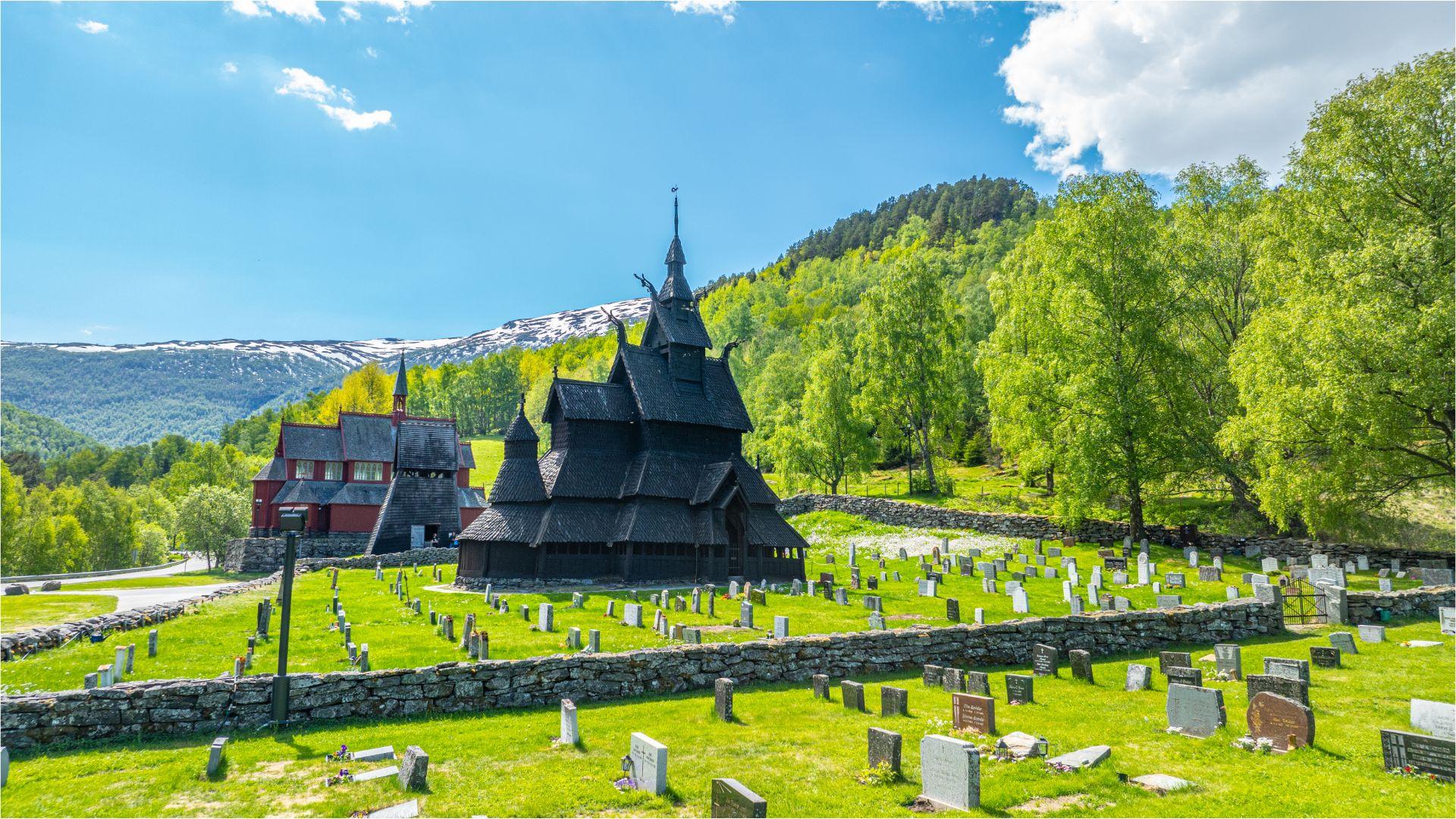
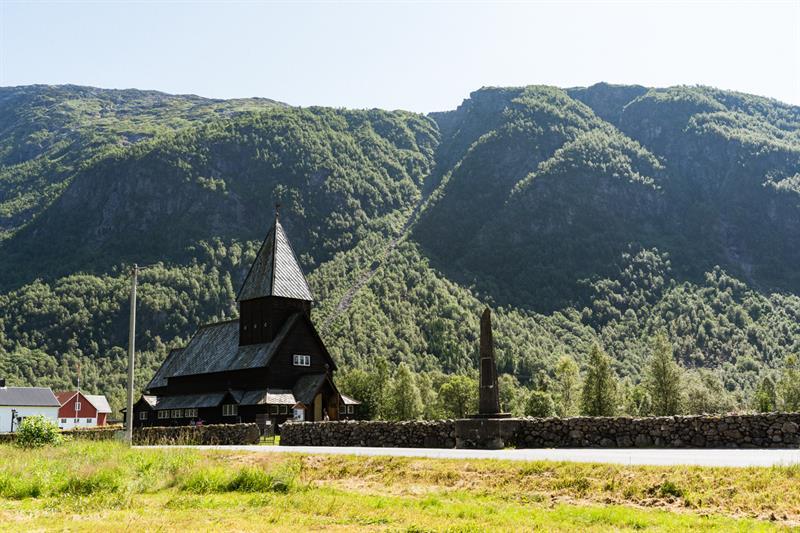
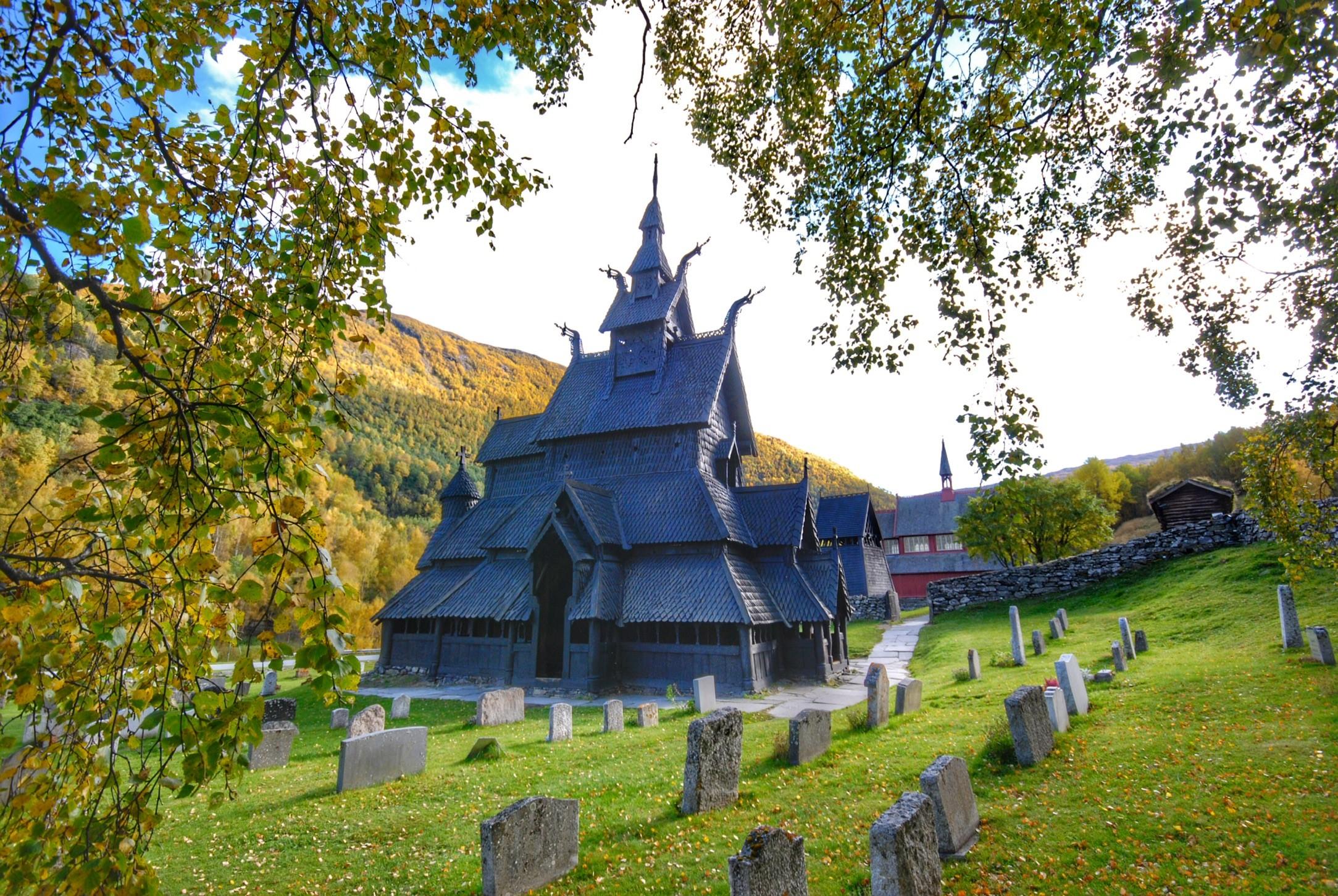
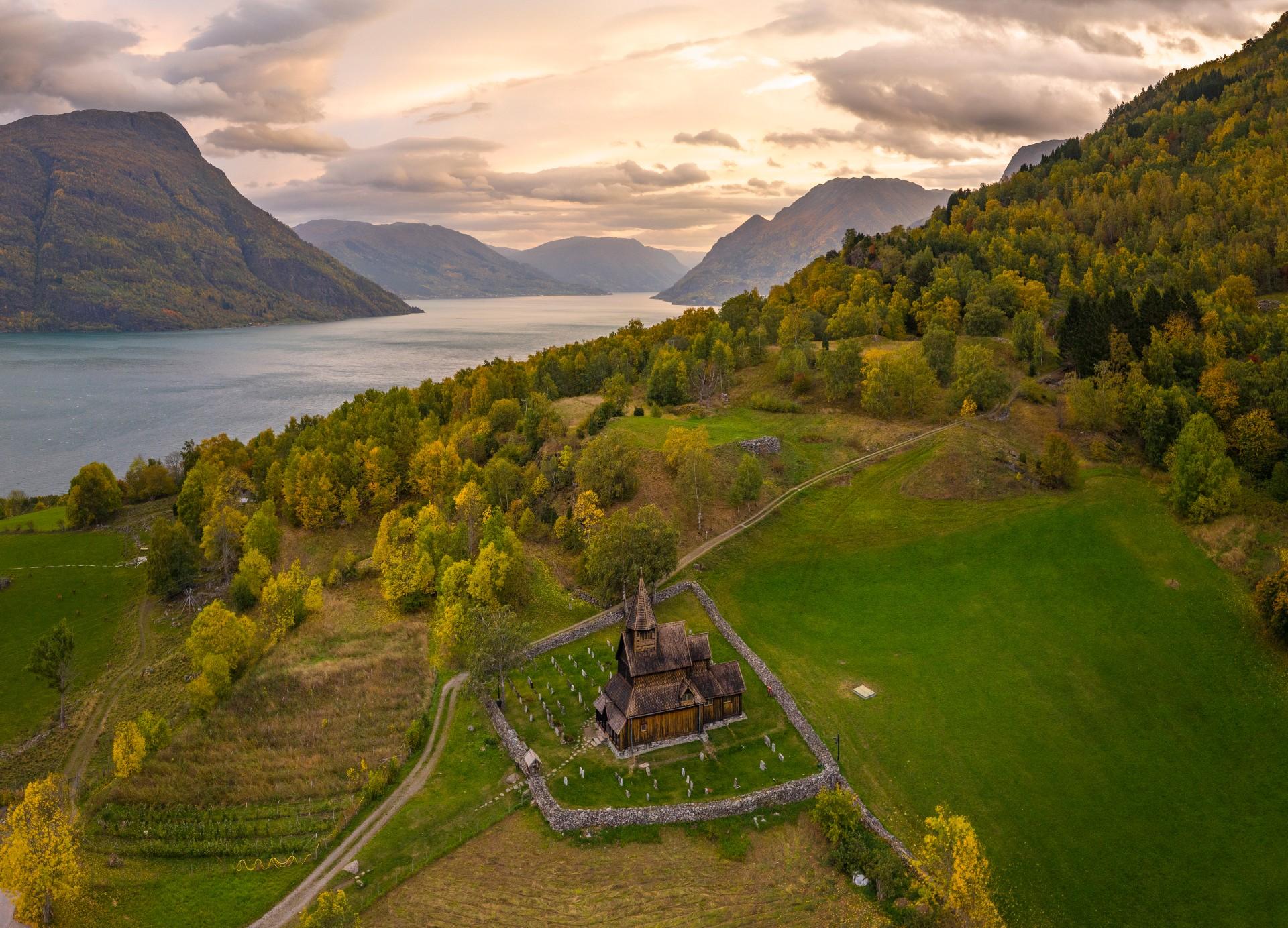
Se vuoi ammirare la chiesa di legno meglio conservata devi andare a vedere la stavkirke di Borgund a Lærdal, nella Norvegia dei fiordi. Ma ci sono bellissimi esempi di elaborate chiese di legno anche a Heddal nel Telemark, la ricostruzione della chiesa di Fantoft a Bergen, e la stavkirke di Urnes a Luster che è nella lista dei patrimoni dell’UNESCO, per citarne solo alcune.
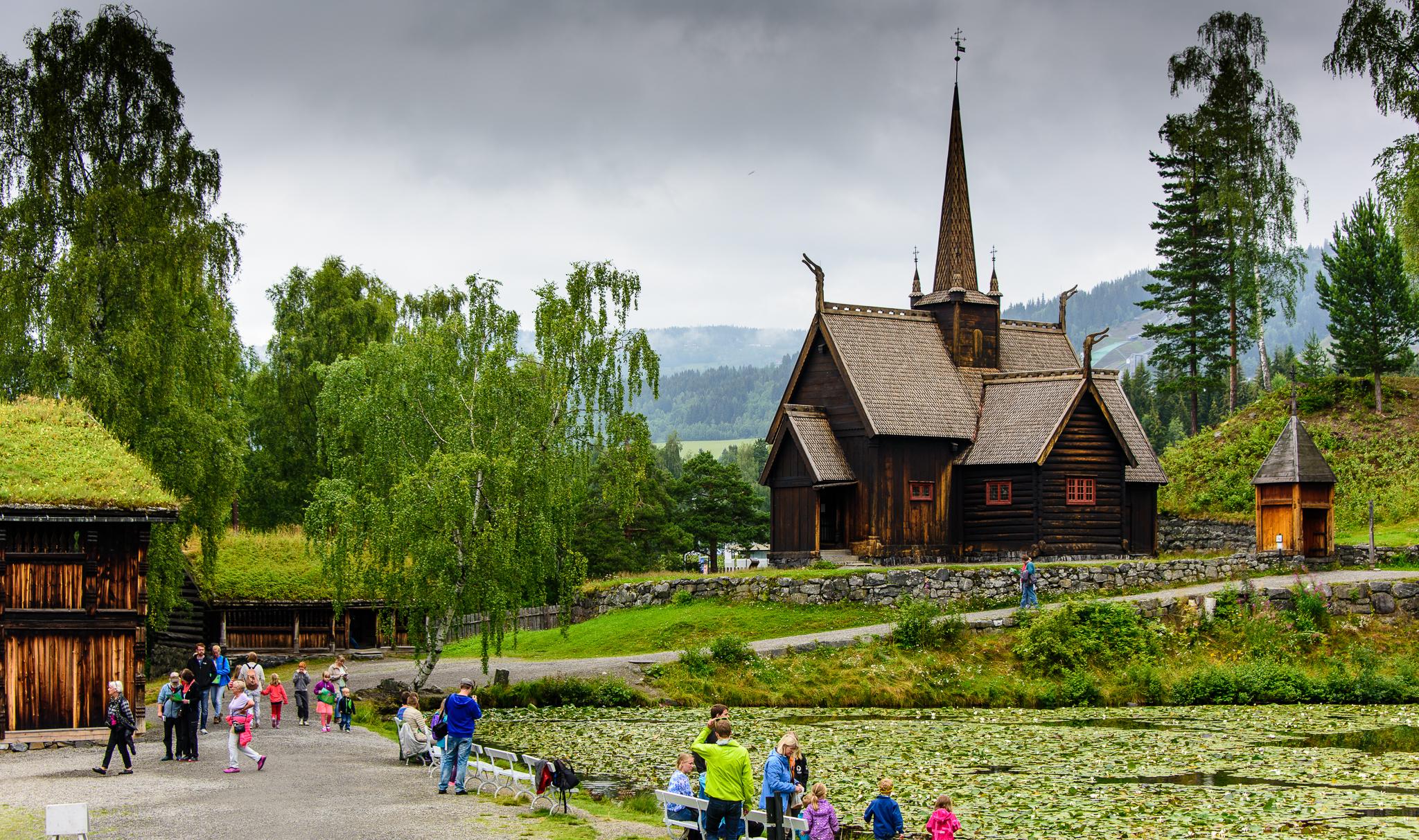
Una stavkirke venne spostata da Gol al Museo Folcloristico Norvegese sulla penisola di Bygdøy a Oslo, dove si può vedere oggi ricostruita nella presunta forma originaria. Anche la piccola stavkirke di Garmo è stata trasferita al museo all’aperto di Maihaugen, a Lillehammer.
Queste però non sono le uniche chiese di legno che sono state spostate nel corso degli anni.
La fine delle stavkirker
Le stavkirker non sono sempre state così apprezzate come lo sono al giorno d’oggi. All’inizio del XIX secolo la maggior parte delle chiese di legno erano scomparse. Nel 1851 una nuova legge stabiliva che tutte le chiese dovessero avere spazio a sufficienza per ospitare il 30% della popolazione locale e, vista la rapida crescita del numero di abitanti, molte delle stavkirker ancora esistenti erano troppo diventate troppo piccole. Furono costruite chiese nuove, più calde e luminose, che divennero velocemente più popolari delle vecchie chiese di legno, che erano invece fredde e buie.
Questo portò, negli anni tra il 1851 e il 1890, alla demolizione o alla vendita di molte stavkirker, il cui legno massiccio veniva spesso riutilizzato nella costruzione di altri edifici. Ma per fortuna ci fu chi vide il valore di queste antiche chiese di legno e si adoperò con passione per preservarle.
Il protettore della chiesa di Vang
Una delle chiese di legno che vennero salvate fu la stupenda chiesa di Vang, che è la stavkirke più visitata al mondo. Per uno strano caso però questa chiesa norvegese non è in Norvegia, ma si trova ora in Polonia!
L’eroe di questa storia è Johan Christian Clausen Dahl, un pittore di Bergen e primo professore di storia dell’arte in Norvegia. Fu una figura centrale nella creazione di quella che ora è chiamata Fortidsminneforeningen (Associazione per la conservazione del patrimonio storico), che giocò un ruolo fondamentale nel processo di salvaguardia delle stavkirker. Dahl scrisse un articolo molto autorevole sull’unicità e l’origine delle chiese di legno norvegesi e sulle loro “forme incredibilmente fantastiche”, che contribuì a salvare le ultime chiese rimaste. Egli fece anche conoscere la storia di queste straordinarie costruzioni a una platea più ampia di storici dell’arte europei.
Dahl finì per acquistare la chiesa di Vang a un’asta e riuscì a convincere il re di Prussia a spostarla a Berlino. La chiesa venne smontata pezzo a pezzo e trasportata a sud con cavalli, slitte e per nave. Un anno più tardi il re chiese che la chiesa venisse ricostruita dove si trova ora, in Bassa Slesia in Polonia, nella cittadina di Karpacz.
Nonostante la chiesa abbia perso per strada qualcosa delle sue caratteristiche originarie, una cosa è certa: se Dahl non fosse intervenuto in tempo acquistandola, sarebbe andata persa.
Aperte al pubblico
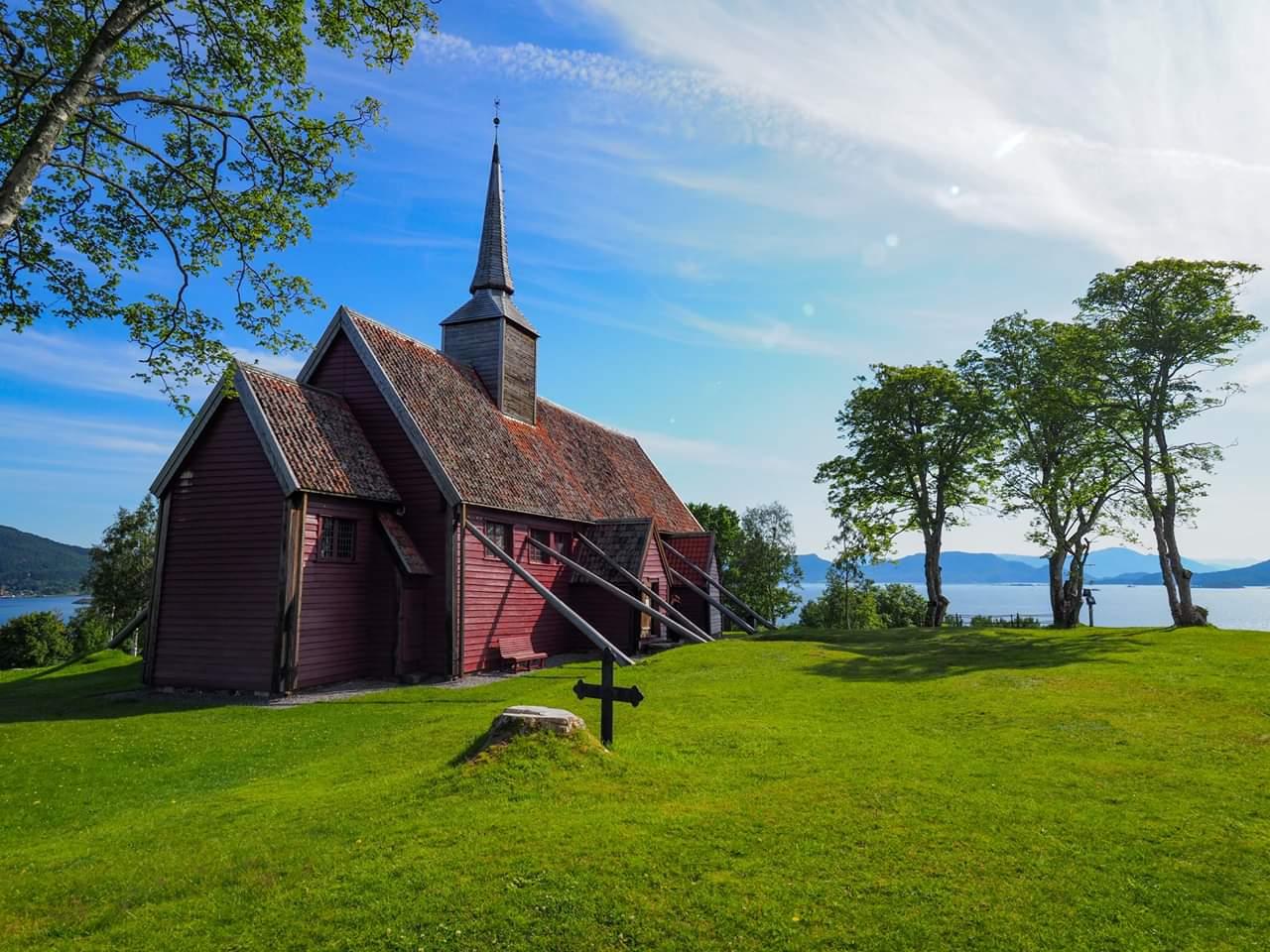
Attualmente sono rimaste 28 stavkirker. Come puoi vedere dalla mappa qui sotto, la maggioranza delle chiese di legno si trova nelle regioni più interne della Norvegia orientale e nella Norvegia dei fiordi.
La maggior parte sono aperte al pubblico durante l’estate, mentre altre accolgono i visitatori tutto l’anno.
 Ål
ÅlÅl Stave Church Museum
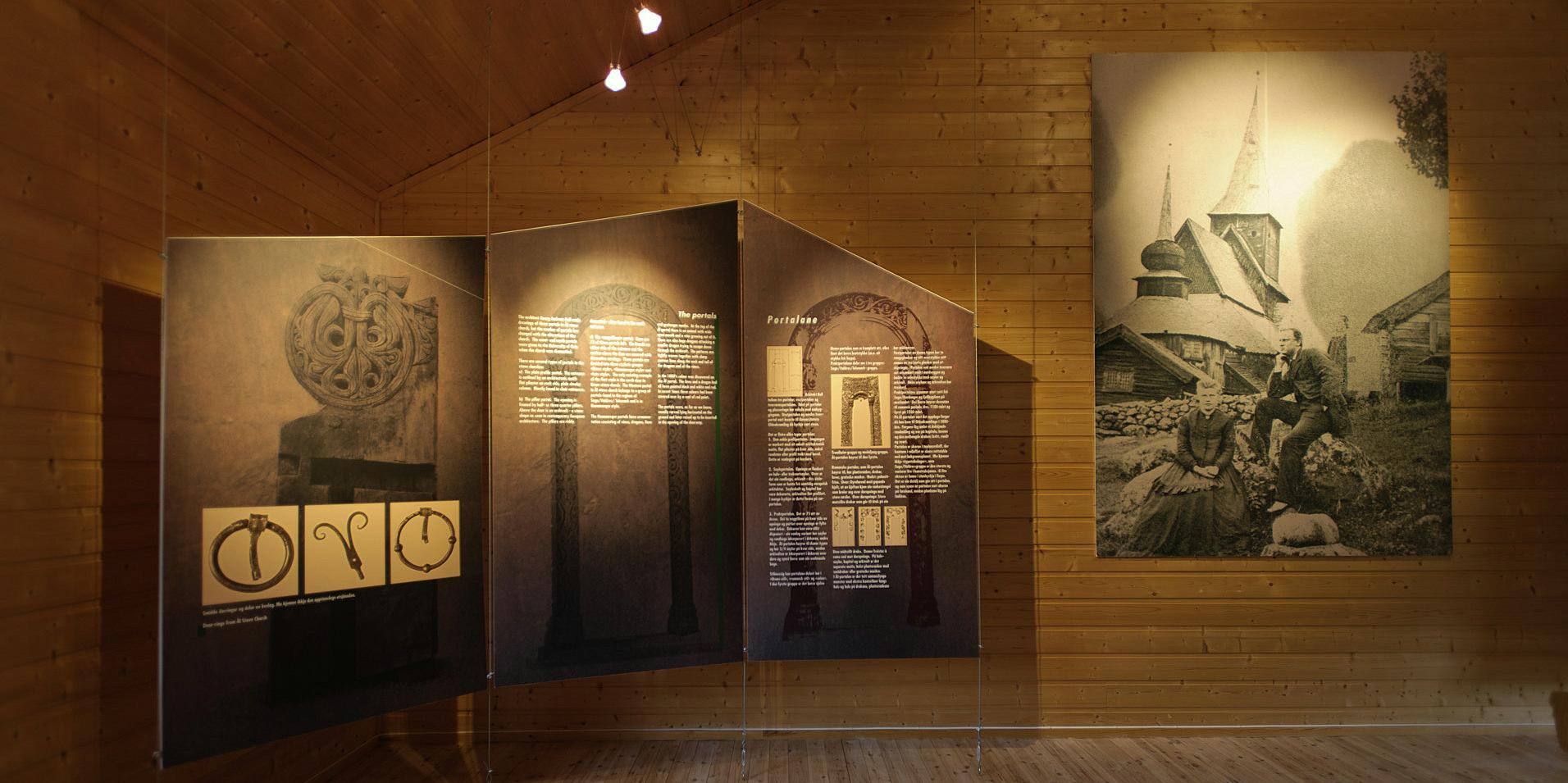
The Ål Stave Church dated from the latter part of the 12th century was richly decorated at the time of its demolition in 1880. The main doorway and the ceiling painting can be seen at the medieval exhibition at the Historical Museum in Oslo. Some of the church's fittings as well as a copy of the Ål ceiling can be found in Ål Church. The site of the church was examined and planned, and today it forms part of the church park. In the 1990s, the Ål Stave Church Museum in Prestegardslåven in the church park opened. The museum restores and displays decorative panels from stave churches and it has a copy of the Ål doorway. The exhibition provides information about Ål Stave Cchurch and about Norway’s other stave churches in Norway. Free admission for children up to the age of 16, when accompanied by an adult.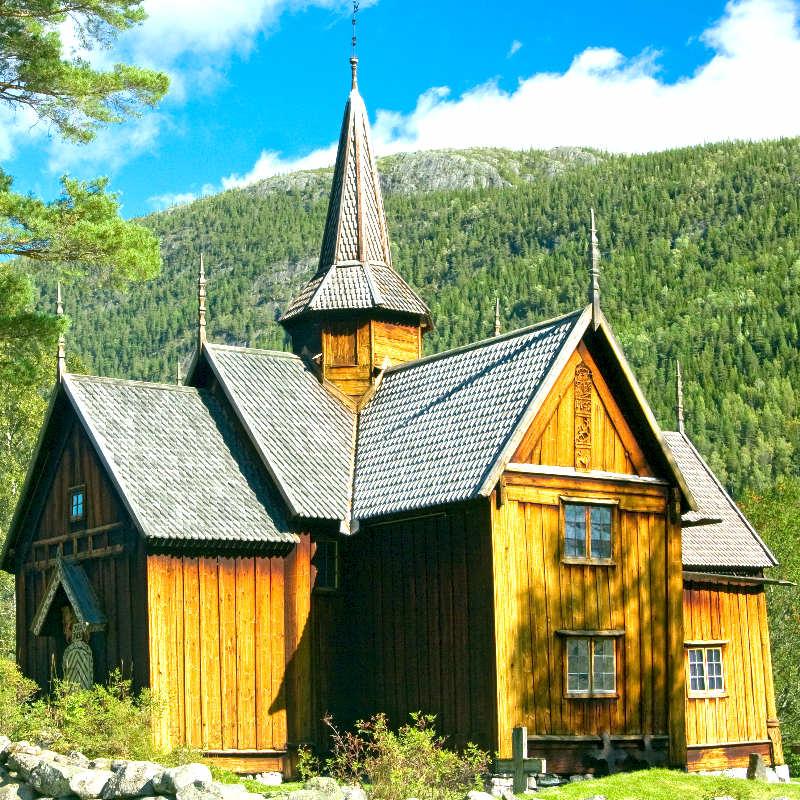 Nore
NoreNore Stavkirke
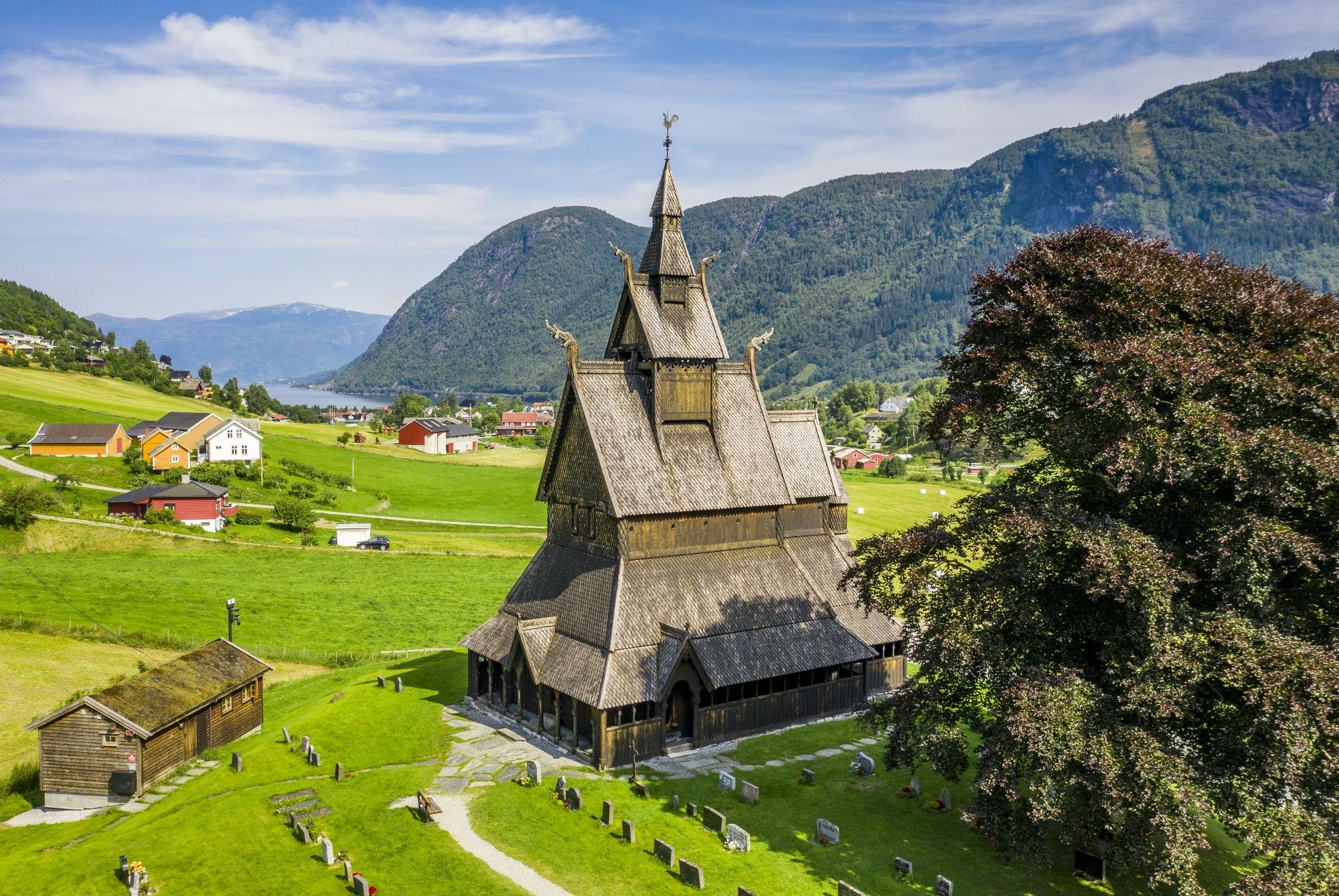
Nore Stave Church Nore Stave Church is located in Nore and Uvdal municipality in Buskerud. Nore Stave Church was built according to an architectural style called: Numedalstype. The church was built as a cruciform church approximately 1167, with galleries, a chancel and cross naves with an apse. This was very rare at the time, and one does not know of of any other church in Norway or Europe that could have been a model for this structure. The church was partially rebuilt in the 1600s and 1700s. The naves and chancel have remnants of beautiful coloring from 1655 and 1683. As in Uvdal Stave Church the woodcarvings in Nore are very artfully done. The nave's west portal has carved decorations with leaf vines and animal ornamentation. The animal figures are dragons and lions, and the portals are related to similar portals in Telemark. In the Stave Church are also two inscriptions, one of which is a prayer: "Wish me the very best". The two crucifixes may be from the Middle Ages, and during the excavation revealed a piece of painting that seemed to originate from the late Middle Ages. The Church seems to have been richly endowed with art objects. The Christian symbols probably spoke more directly to the medieval population than they do to people of today. Art objects and decoration of the stave churches in Nore and Uvdal confirms the impression we have from other stave churches, that the first half of the Middle Ages was the most creative period.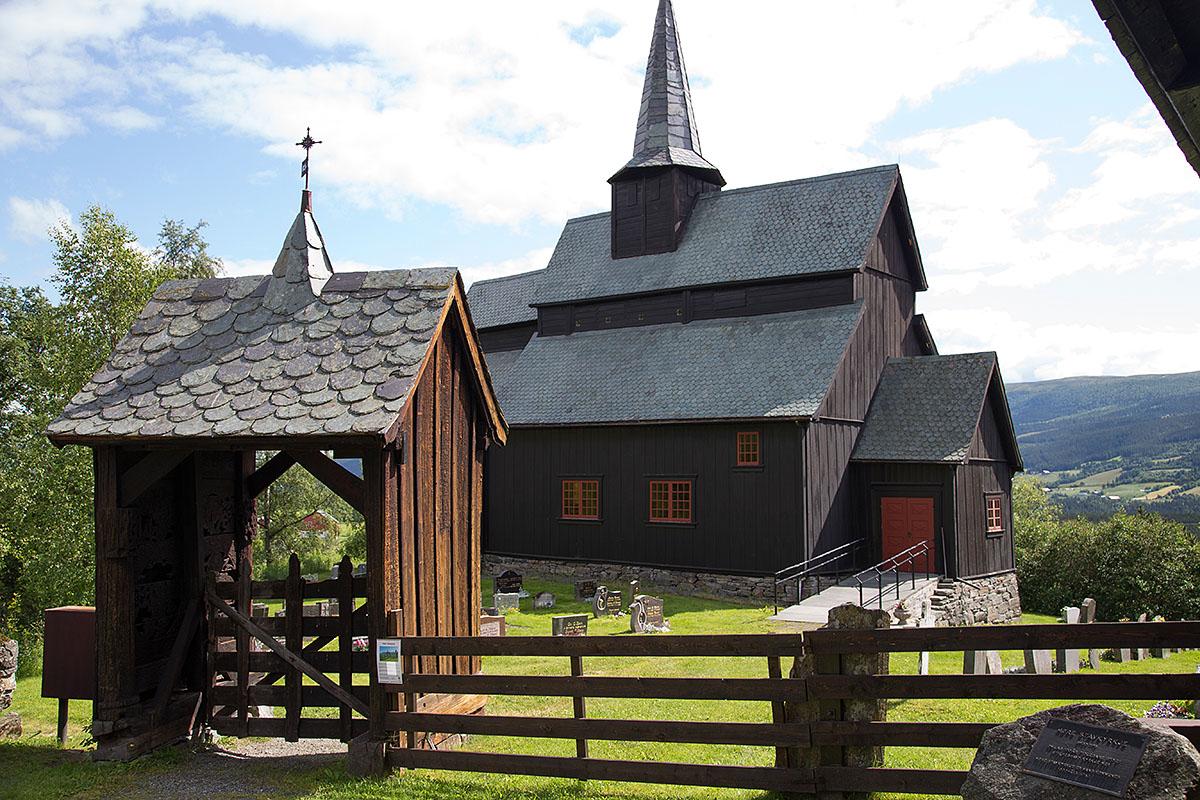 Ryfoss
Høre Stave Church
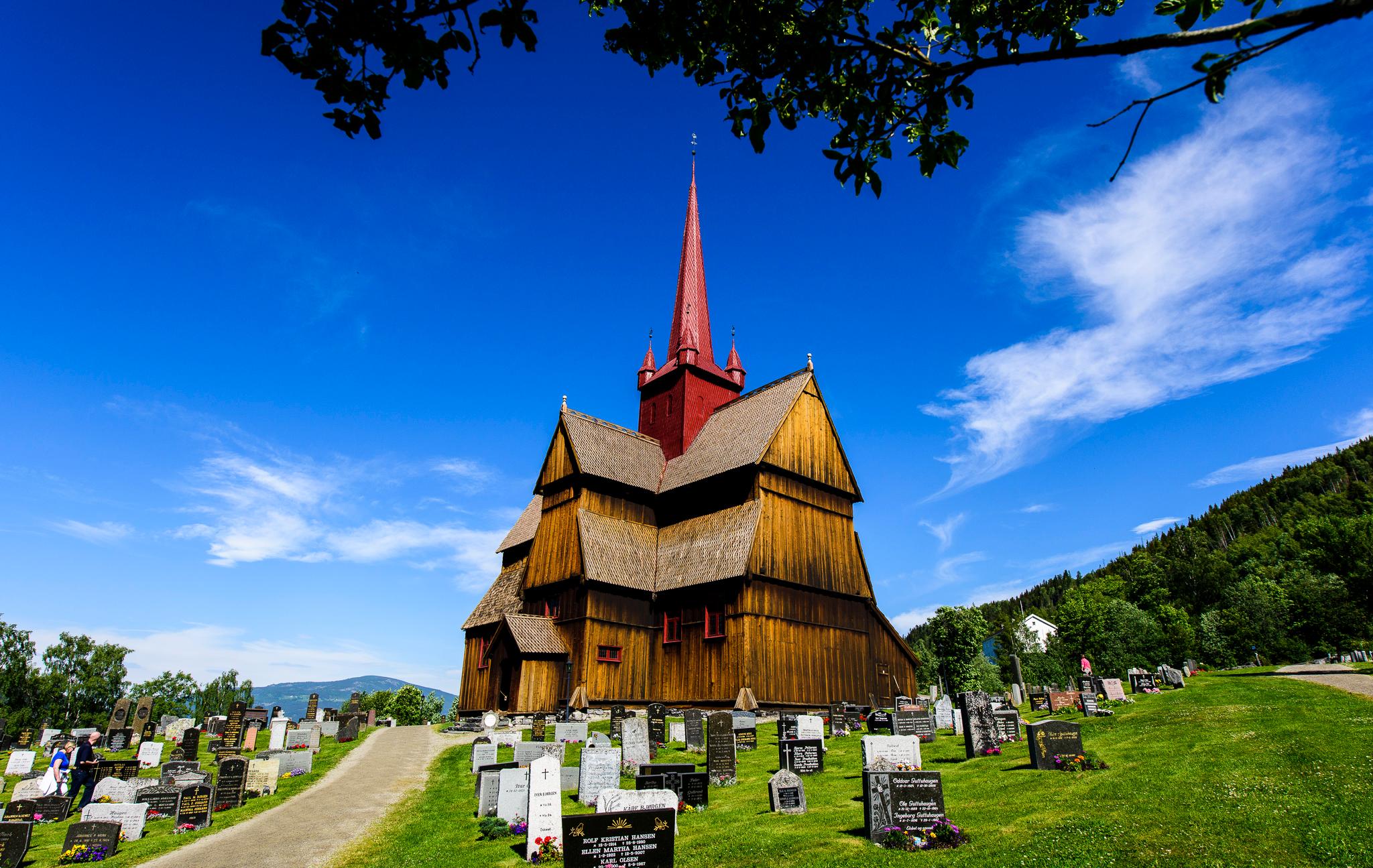
Høre Stave Church is rich in dragon and lion carvings from the Middle Ages, and among these are two beautiful portals. What used to be the ridge turret is today the entrance of the graveyard. An unusual runic inscription shows that Høre Stave Church dates back to around 1179. However, as the oldest coin found under the church floor is from around 1100, it is presumed to have replaced a previous, smaller sized church. An extension was built in 1822, and today still, Høre Stave Church serves the community as a regular parish church. The story behind the runic inscriptions found in the pulpit is exciting. According to legend, King Sverre passed through Valdres in 1177 when he fled before Magnus Erlingsson. Elling, the feudal overlord of Kvie, had joined King Sverre in his fight against King Magnus and his father the Earl Erling Skakke. When Erling Skakke fell in the battle at Kalvskinnet in Nidaros (Trondheim), Elling and his brother Audun decided to build Høre Stave Church as the runic inscriptions show: "In the summer of which the brothers Elling and Audun cut (timber) to this church, Erling (fell) in Nidaros." Admission (incl. guiding): Adults NOK 80,- Children 6-16 years NOK 50,- Family NOK 170,- Groups NOK 60,- per person (minimum 10 people) No student or senior discounts. Visits out of hours on request, minimum charge NOK 500,- Please note that we cannot accept foreign currencies, i.e. Euro.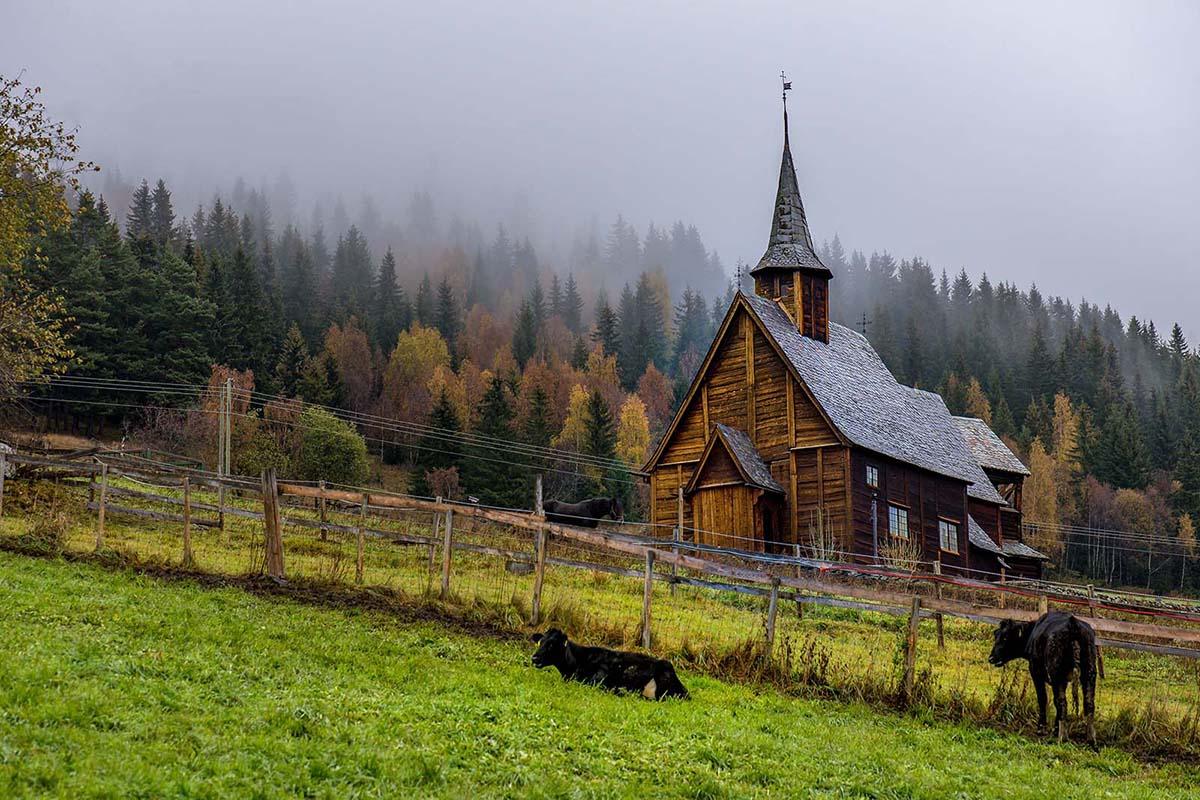 Lomen
LomenLomen Stave Church
Lomen Stave Church is believed to date back to around 1192. The oldest coin found is from King Sverre`s era 1177-1202. In 1750, the church was converted and extended as it had become too small to meet the needs of an increasing population. When the new Lomen Church was completed in 1914, regular use of the stave church ended. Today, it is only used for weddings and church services during the summer season. Wooden sections dating back to the Middle Ages have been stripped down to the woodwork, but post-reformatory parts are still painted. Several medieval portals featuring wood carvings and animal decorations can be found in the church. Of the soapstone font from the Middle Ages, only the base remains. A mediaeval chest leans towards the wall in the choir. It features a magic runic inscription that has almost been rubbed off. The Madonna-head on the altar is a plaster copy of the beautiful original from the 1200s. It was probably once part of a whole figure. The original can be found at Valdres Folk Museum in Fagernes. Admission (incl. guiding) - payment by cash only: Adults NOK 80,- Children 6-16 years NOK 50,- Family NOK 200,- Seniors NOK 70,- Groups NOK 60,- per person (minimum 10 people) No student discount. Visits out of hours on request, minimum charge NOK 500,- Please note that we cannot accept foreign currencies, i.e. Euro.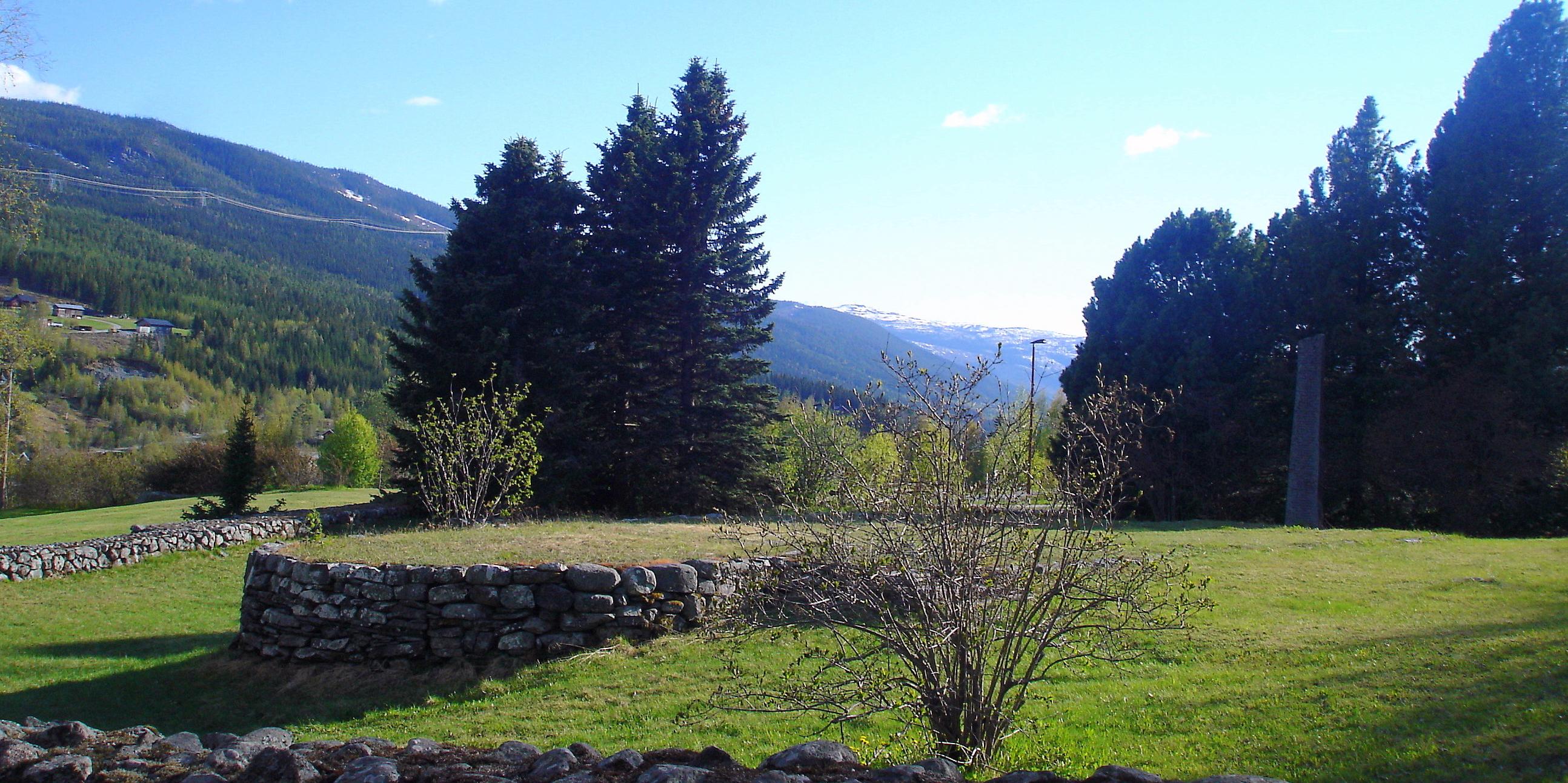 Ål
ÅlThe old Ål Stave Church site
Ål Stave church was erected around 1170 and demolished in 1880. The stave churches are a wooden building with a carrying construction of poles. The stave churches are today counted as among the most important European architecture in wood from medieval times. The stave church in Ål with its 18 poles was the largest church in Hallingdal. The church also changed appearance several times with expansions and reconstructions. In Ål Stave church they also found an ancient runic inscription that showed who was the constructor of the church. This site is located in the centre of Ål, parking spot by the schools.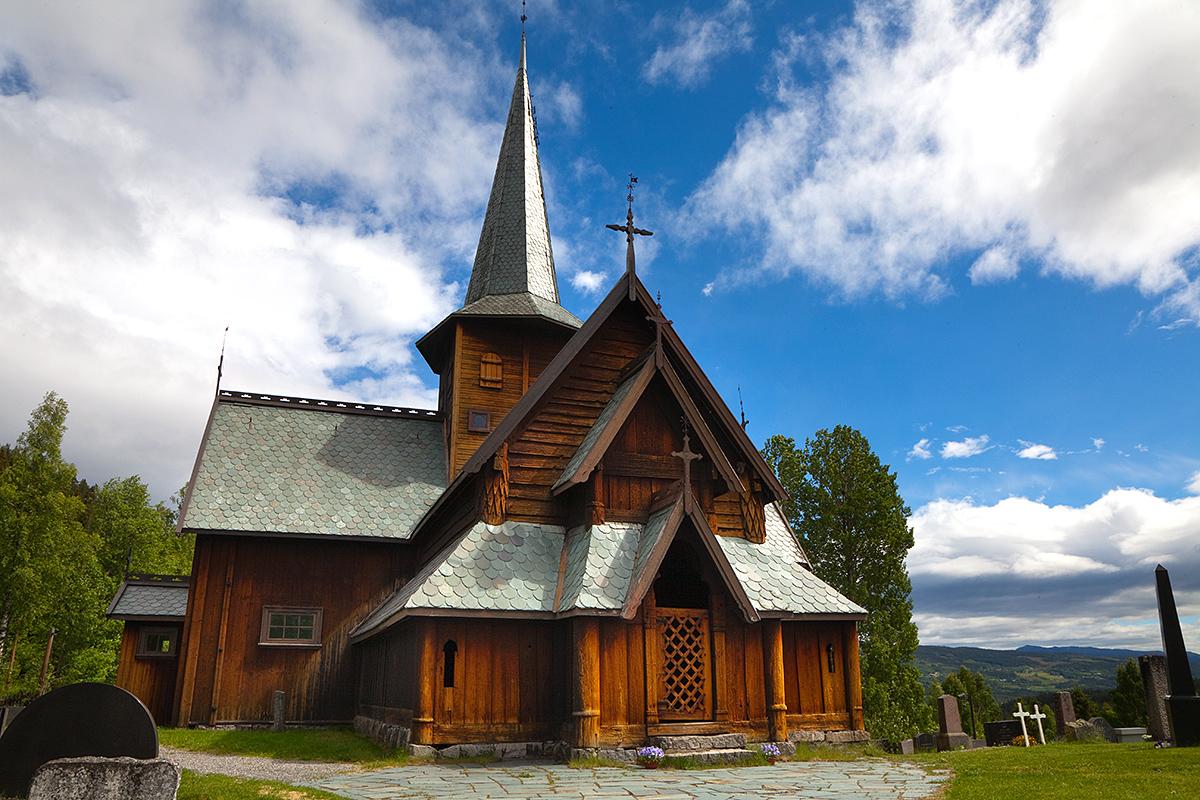 Hedalen
Hedalen Stave Church
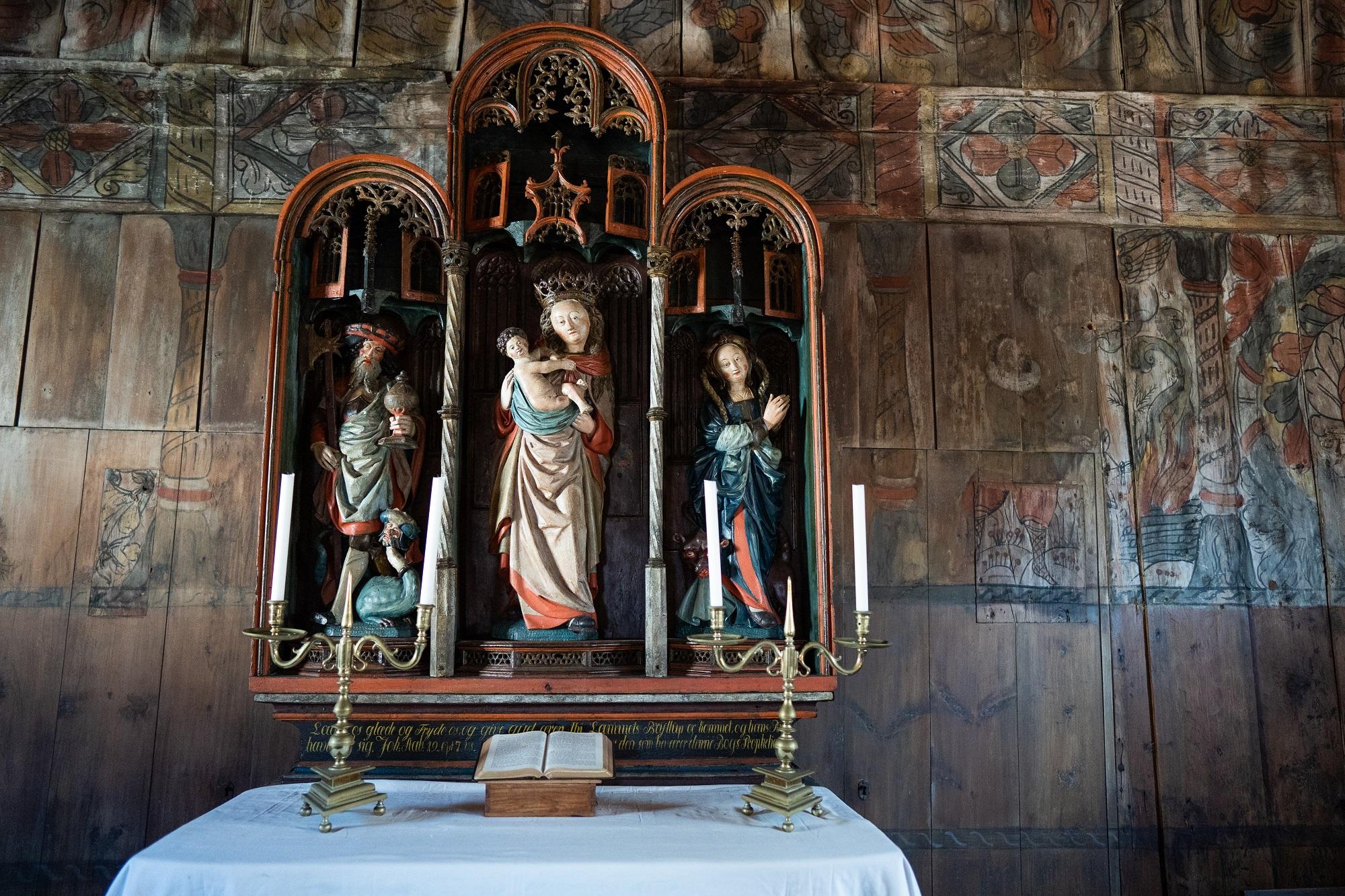
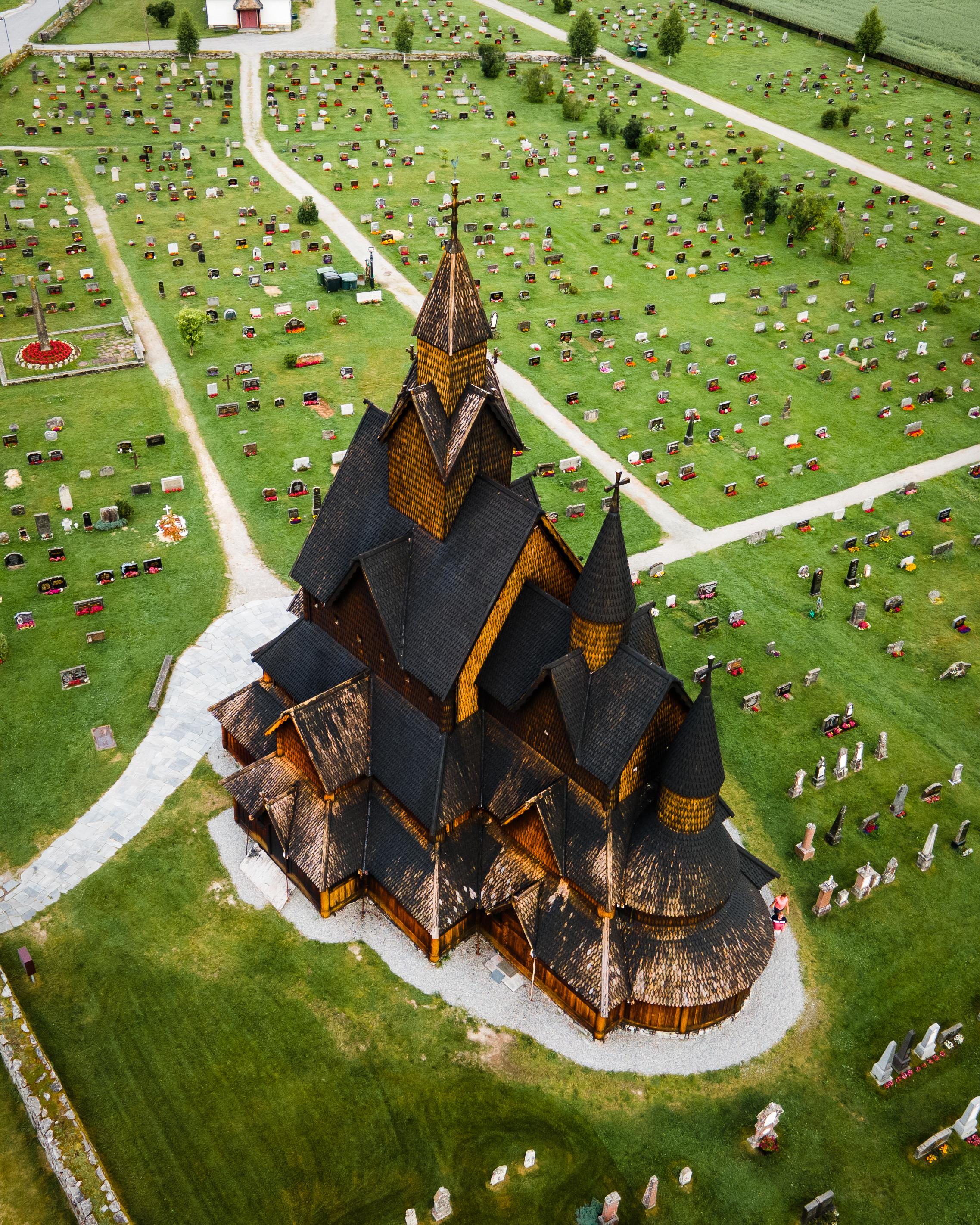
The Hedalen Stave Church may be the oldest of its kind in Valdres today. It comprises an unusual amount of catholic items and among these a reliquary. Only a few of these can still be found in Norway. The church dates back to around 1163, and coins from King Sverre's era 1177-1202 have been found under the floor. It is in use as a regular parish church. The west-facing portal features dragon and vine decorations from the late 1100s. These dragons symbolise the evil forces you leave behind before you enter the place of worship. The reliquary is the most treasured item in the church. It is made out of copper-gilded wood, and dates back to around 1250. The figures featured are Christ, St. Mary, St John, St. Jacob, St. Thomas, St. Olav and St. Peter. Norway has only a few such reliquaries left. Its original reliquary casket is still intact, and is the only one of its kind. The Hedal Madonna (sculpture of St. Mary), dating back to the mid-1200s, is one of the most stunning pieces of medieval ecclesiastical art in Norway. Originaly, the sacrament house was part of the triptych. Changes to this gothic triptych were probably made in 1699, and it was painted in 1769. Its crucifix dates back to around 1260-1280. The Romansque font is made out of soapstone, and has a cover dating back to 1250. In the sacristy, a bearskin is hanging on the wall. According to legend, there was no one left in Hedalen after the Black Death. A hunter found the church in the woods and shot a bear in front of the altar. But there were still people living in Hedalen, and maybe the bearskin was just the vicar's somewhat unusual rug in front of the altar. Admission (incl. guiding) Adults NOK 90,- Children 6-16 years NOK 50,- Family NOK 250,- Groups NOK 70,- per person (minimum 10 people) No student or senior discounts. Visits out of hours on request, minimum charge NOK 500,- Please note that we cannot accept foreign currencies, i.e. Euro.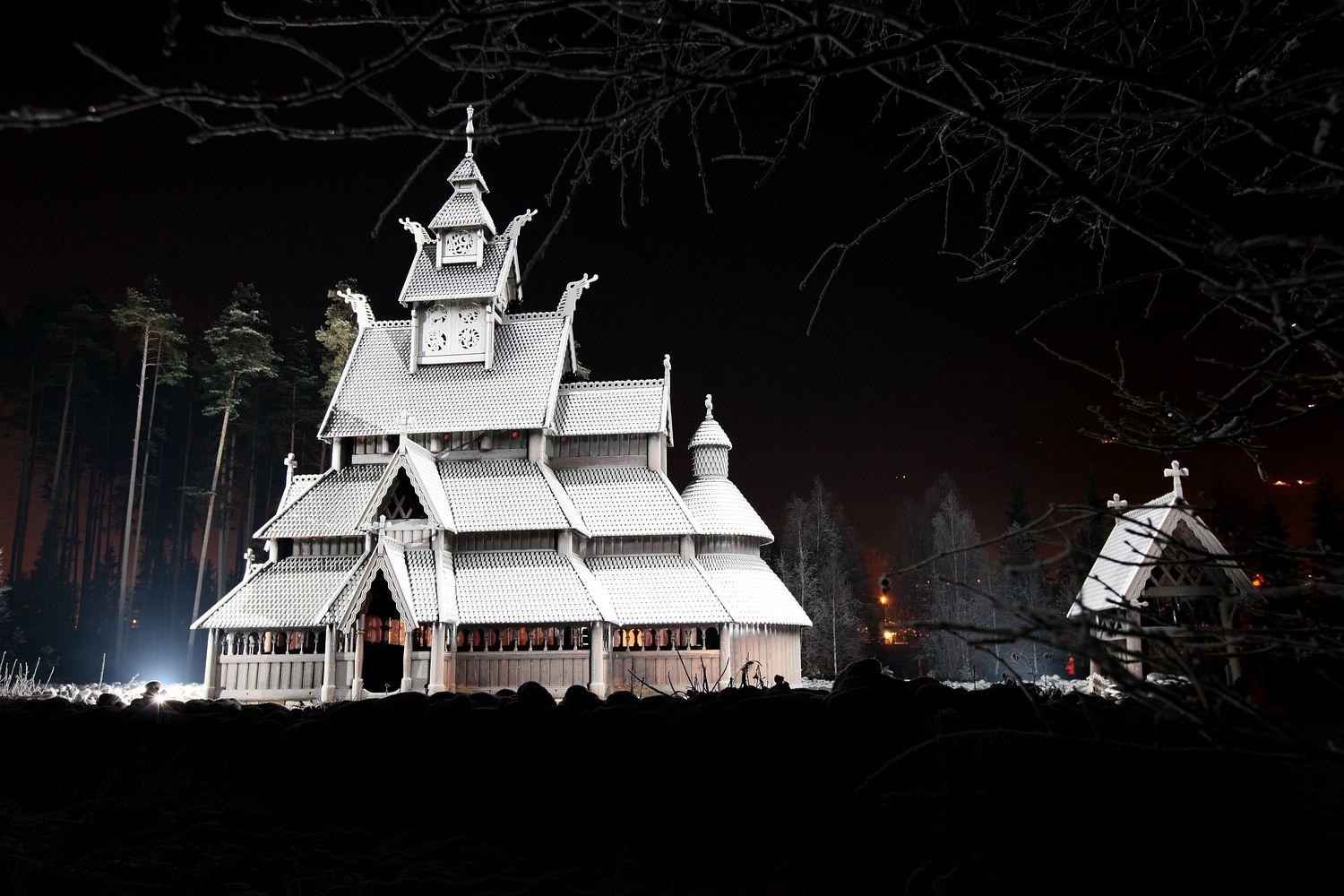 Gol
GolGol Stave Church
It is estimated that around 2000 stave churches were built between 1150 and 1350. This had to be an enormous achievement in sparsely populated Norway, meaning an average of 10 stave churches were erected each year. The accomplishment is no less impressive, considering all construction was done manually, using axes as the primary tool. This was when Norway had just been converted to Christianity, and the true faith had not yet been fully embraced. It's interesting to observe some Norse symbols used in the churches, such as Thor's hammer above the entrance, dragons on the roof, Odin, Thor, and others standing and supporting the church roof (the masts). Why these symbols found their way into a Christian church remains unknown. History suggests that Norwegians were uncertain about the new faith and wanted to keep "one foot" in Norse beliefs just to be safe. It is assumed that craftsman guilds led the construction of stave churches. When studying the construction, many aspects resemble boat building, which is precisely where these craftsmen gained expertise through centuries of constructing Viking ships and other boats. Hence, they possessed the skills to create some of the finest examples of wooden architecture. Garðar kirkja The original Gol stave church was moved to the Norwegian Folk Museum on Bygdøy in Oslo, belonging to the reigning monarch of Norway. Studies indicate that the church was built after 1216, with elements dating as early as 1157. The old stave church site is in the hamlet where Gol was located at the time, 300 meters southwest of the current Gol church on Leikvollen in Golreppen. The stave church was used until 1881, when Gol got a new one. Gol Stave Church began to deteriorate significantly in the 1800s. The church was also heavily modified due to increased space requirements. In 1882, the church was sold to the "Association for the Preservation of Norwegian Ancient Monuments," it was moved to Bygdøy Kongsgaard, now the Norwegian Folk Museum. The church was restored to its original form and size during the reconstruction at the folk museum, with doubts about the reconstruction, using Borgund Stave Church in Sogn as a model. Borgund Stave Church is considered the sister church to Gol Stave Church, possibly built by the same craftsmen. Gol Stavkyrkje The church on Storeøyne (the island in Gol) replicates the original stave church from the 1200s. The church was completed in 1994 and consecrated on July 10. Gol Stavkyrkje consists of a nave, ambulatory, gallery, choir, and apse. Three spires stand on the main roof. A challenge in copying a stave church today is the absence of the old, coarse pine forests. Suitable materials are hard to find. Behind the copying of Gol Stavkyrkje lies approximately 10 years of work. Local artisans built the church, and the woodcarving and furnishings were done by Hans Slettemeås from Telemark. Most of the timber was sourced from the valley. Textile artist Karin Stang created the textile work on the apse wall. The man behind the project is civil engineer Torbjørn Rustberggard from Gol. Stave Church - Why is it called a stave church? The reason lies in the robust masts (staves) supporting the church. The stave principle involves standing wall panels enclosed by sills above and below, with corner columns at each end.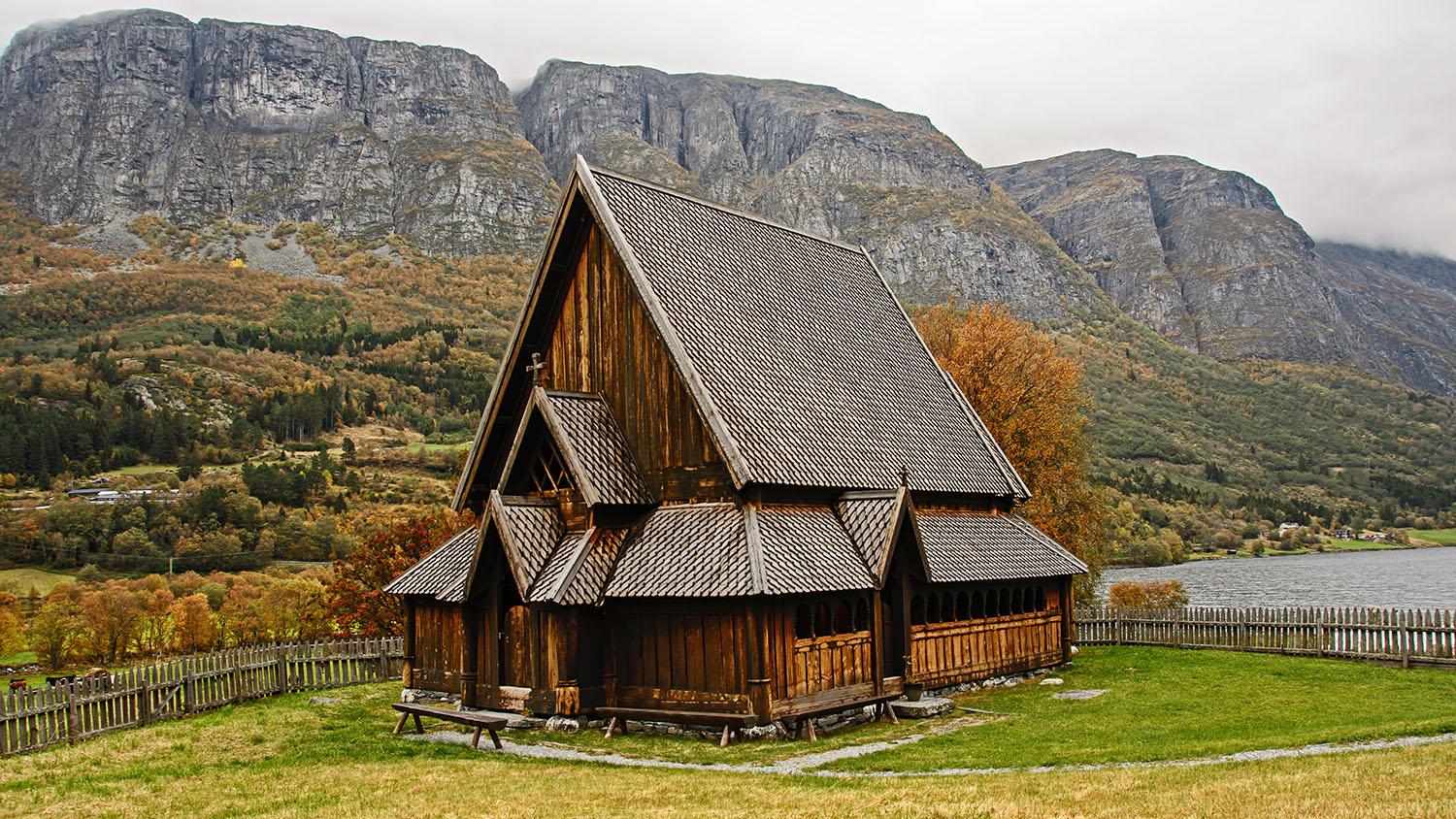 Øye
ØyeØye Stave Church
Øye Stave Church was probably built towards the end of the 1100s. Its original location was in the fields facing Vangsmjøsa. This was an extremely wet area, and during the spring flooding the graves were often filled with water and stones had to be added to the coffins in order to lower them down. The church was in a poor state of repair, and it either rotted away or was taken by the wind. 1747 saw the consecration of the new Øye Church. The stave church disappeared. In the 1930s, work had to be done on the foundations of new Øye Church. Under the church floor, Øye Stave Church was found - 156 pieces in total. No one knows why it was stored here. It was in the end decided to erect the stave church, and it was consecrated in 1965. Today Øye Stave Church is used for weddings and Midsummer Mass only. The church has a strong Catholic medieval character with a narrow opening to the choir and pews along the walls only. It features copies of two medieval portals (probably from the 1100s) with capitals and numerous animal decorations. The door has a medieval ring handle. On the altar stands a crucifix dating back to the 1200s, featuring a Christ-figure from the 1300s. The wooden baptismal font from the 1300s is quite unique, and one of the pews in the choir may be from the Middle Ages. In May 2023 a small exhibition about the stave church was opened just across the road from the church. It is accessible during the church's opening hours, and shows a rune stone, a cencer from the old stave church, a sword and a weaving spoon from the Viking age, as well as an axe head from Helin. There is also information about our one thousand year old church history.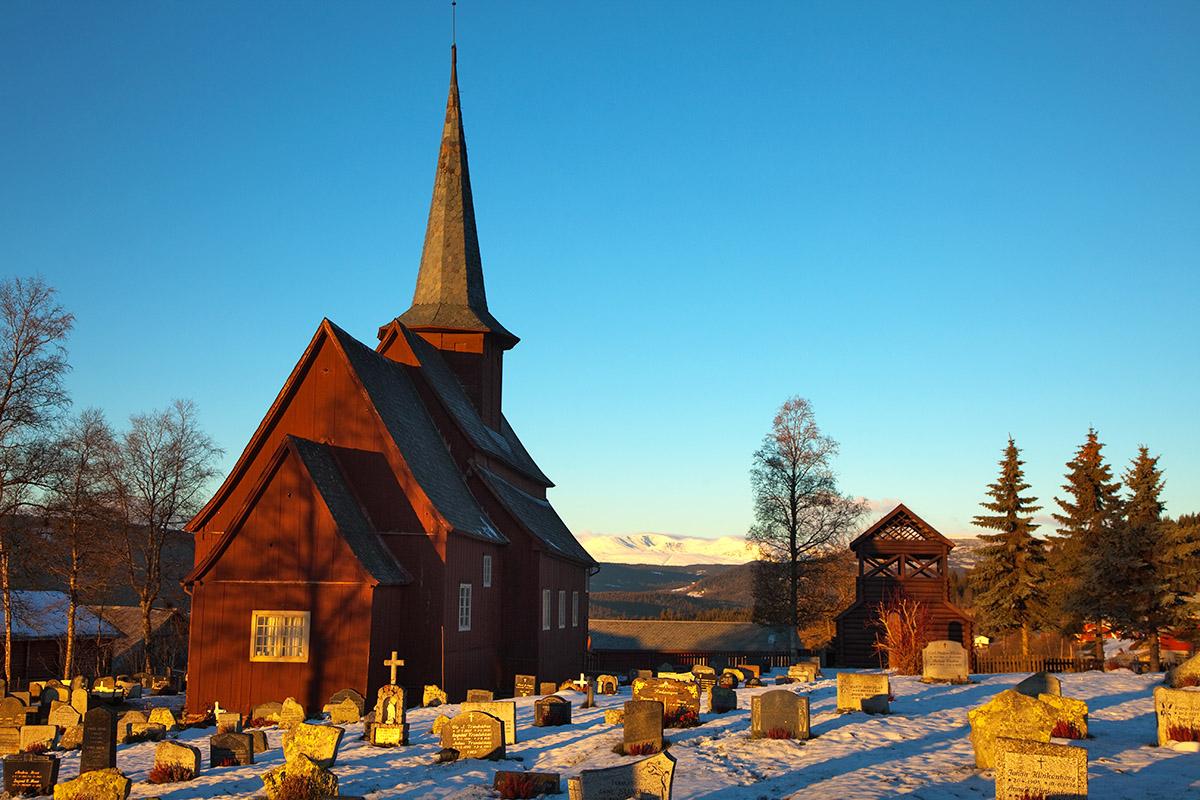 Heggenes
Hegge Stave Church
The Hegge stave church dates back to 1216 and celebrated its 800th anniversary in 2016. The church is still in use as a parish church in the local community. It has a carved gate from the Middle Ages and inside the church you can see the original staves with carved face masks. One of the staves has a runic inscription. The baptismal fountain made of soapstone is from the 1100s and the altarpiece has a unique history which you can read further down. The alterpiece, dating back to 1782, has its own special history. Four men from Hegge were in Gudbrandsdalen to trade livestock, but in the mountains they got caught up in a storm. They promised God that if they were to return home alive, each of them would donate the value of a cow to Hegge Church. They kept their promise, ordered and paid for the altarpiece in Gudbrandsdalen and brought it home on a sledge. Admission: free Guiding for groups can be booked at Øystre Slidre kyrkjekontor, Tel. (+47) 61 35 25 78 or email [email protected]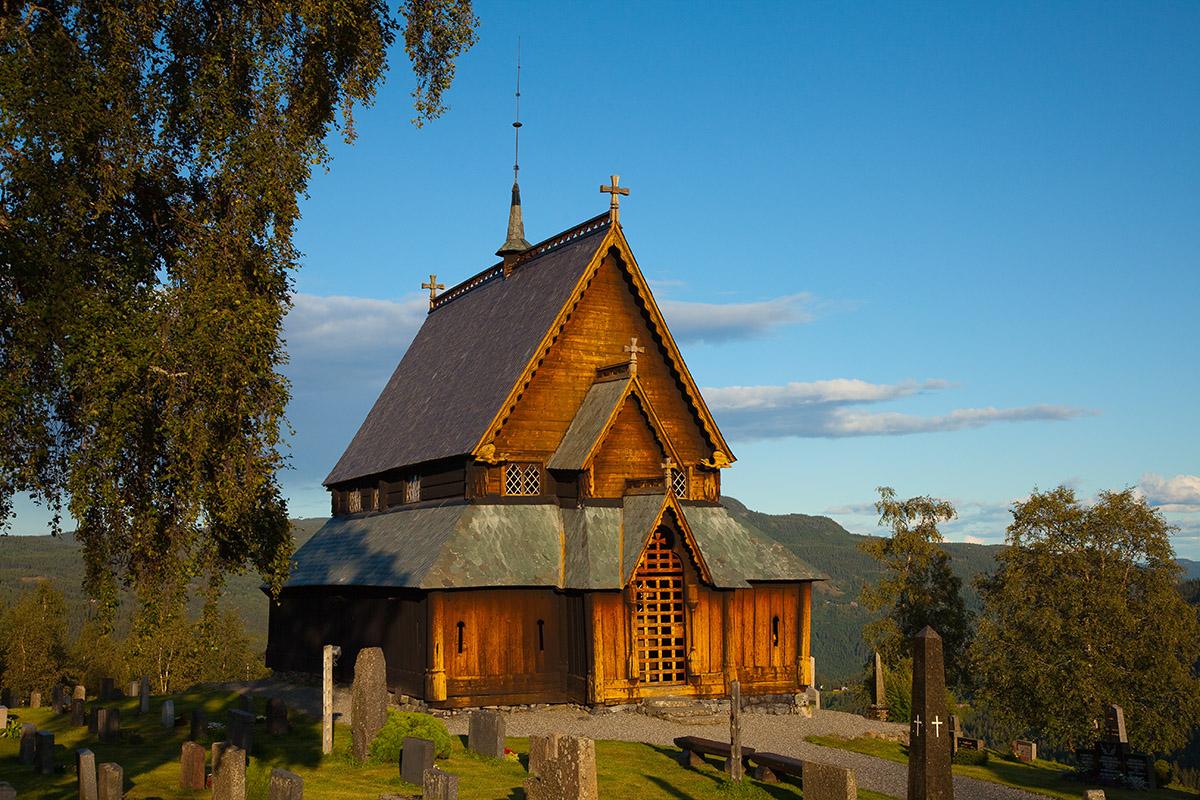 Reinli
Reinli Stave Church
Reinli Stave Church dates back to around 1326. Prior to this, the site has been home to two other churches. The only remains left of the first church are graves, and the second must have burnt down or been demolished. Reinli Stave Church is a parish church, but is only used during summer. For the rest of the year, the chapel further down the road is used. Reinli Stave Church still has 12 medieval consecration crosses. These have been painted black, and are believed to date back to around 1326. Reinli stave church is the only one in Norway with all consecration crosses intact. The altarpiece is a medieval triptych, but it was painted in the 1890s and 1920s. A crucifix hangs on the choir wall. Fittings in wrought iron, the soapstone font and a bell in the belfry are all from the Middle Ages. The wall features a hatch for the leprous, which was used to let them confess and receive Holy Communion. Admission (incl. guiding) Adults NOK 90,- Children 6-16 years NOK 50,- Family NOK 250,- Groups NOK 70,- per person (minimum 10 people) No student or senior discounts. Visits out of hours on request, minimum charge NOK 500,- Please note that we cannot accept foreign currencies, i.e. Euro.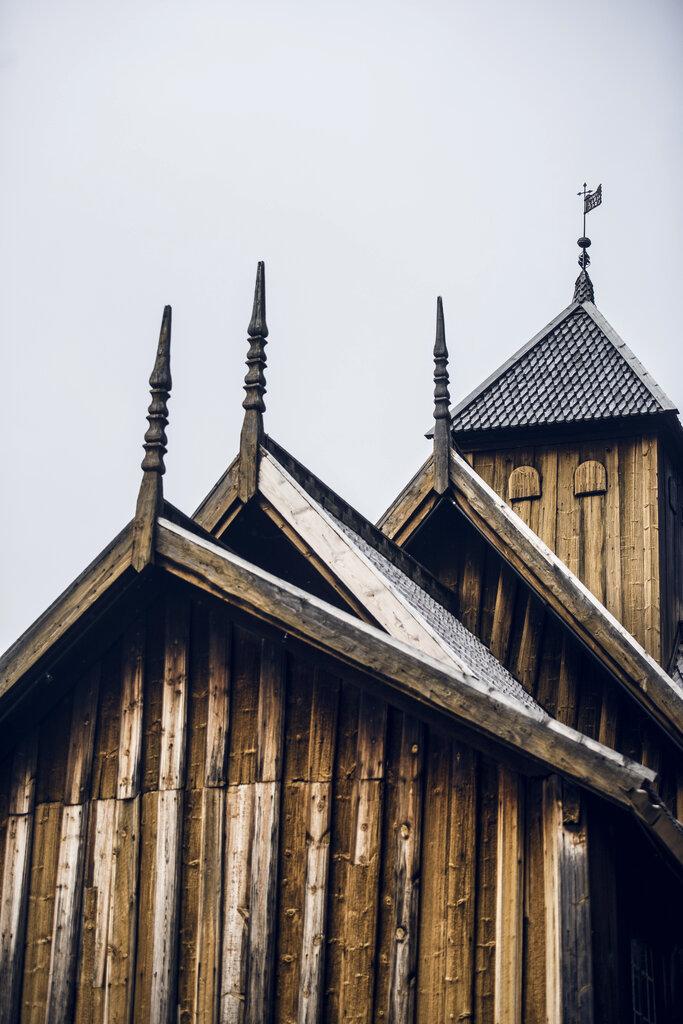 Uvdal
UvdalUvdal Stave Church
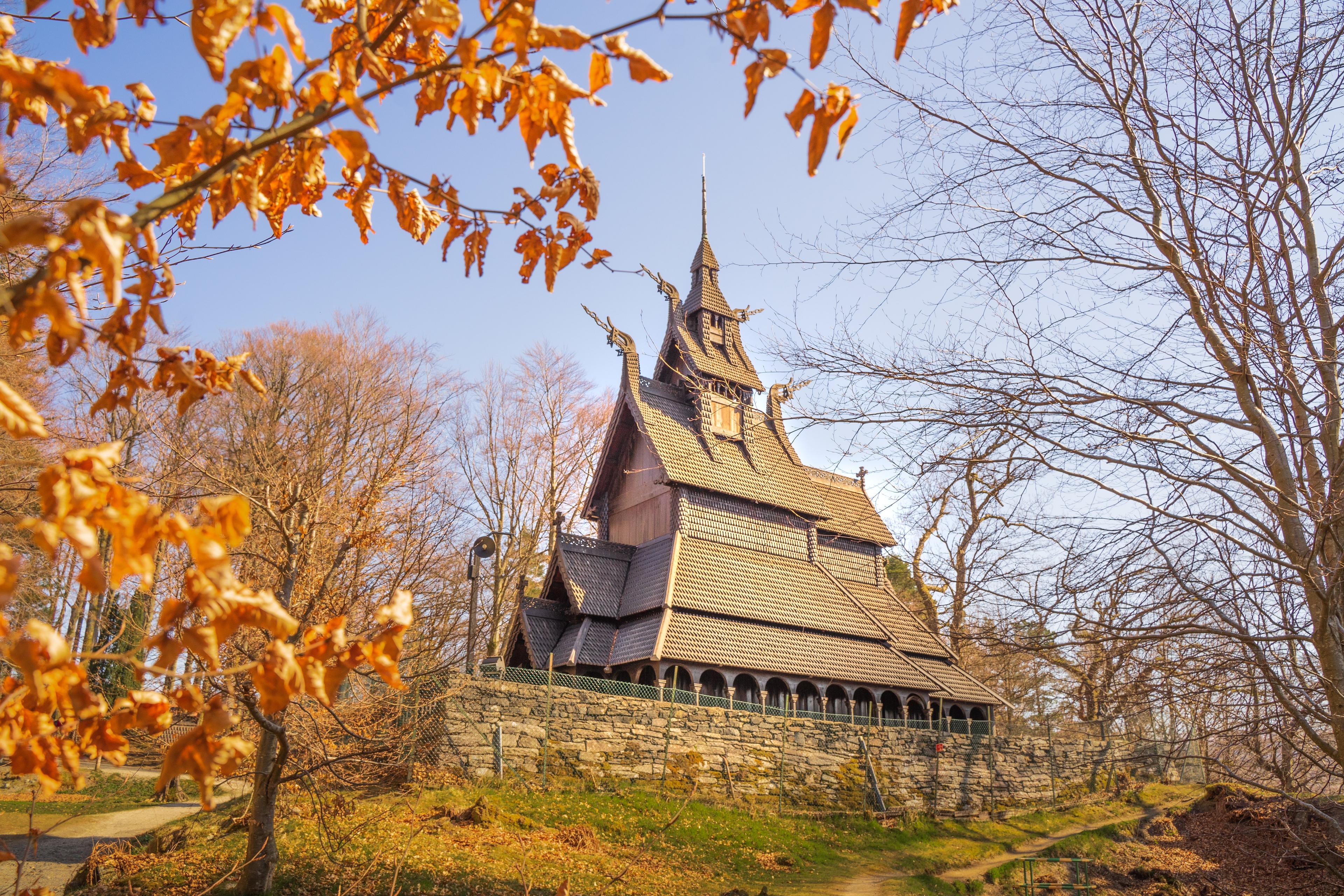
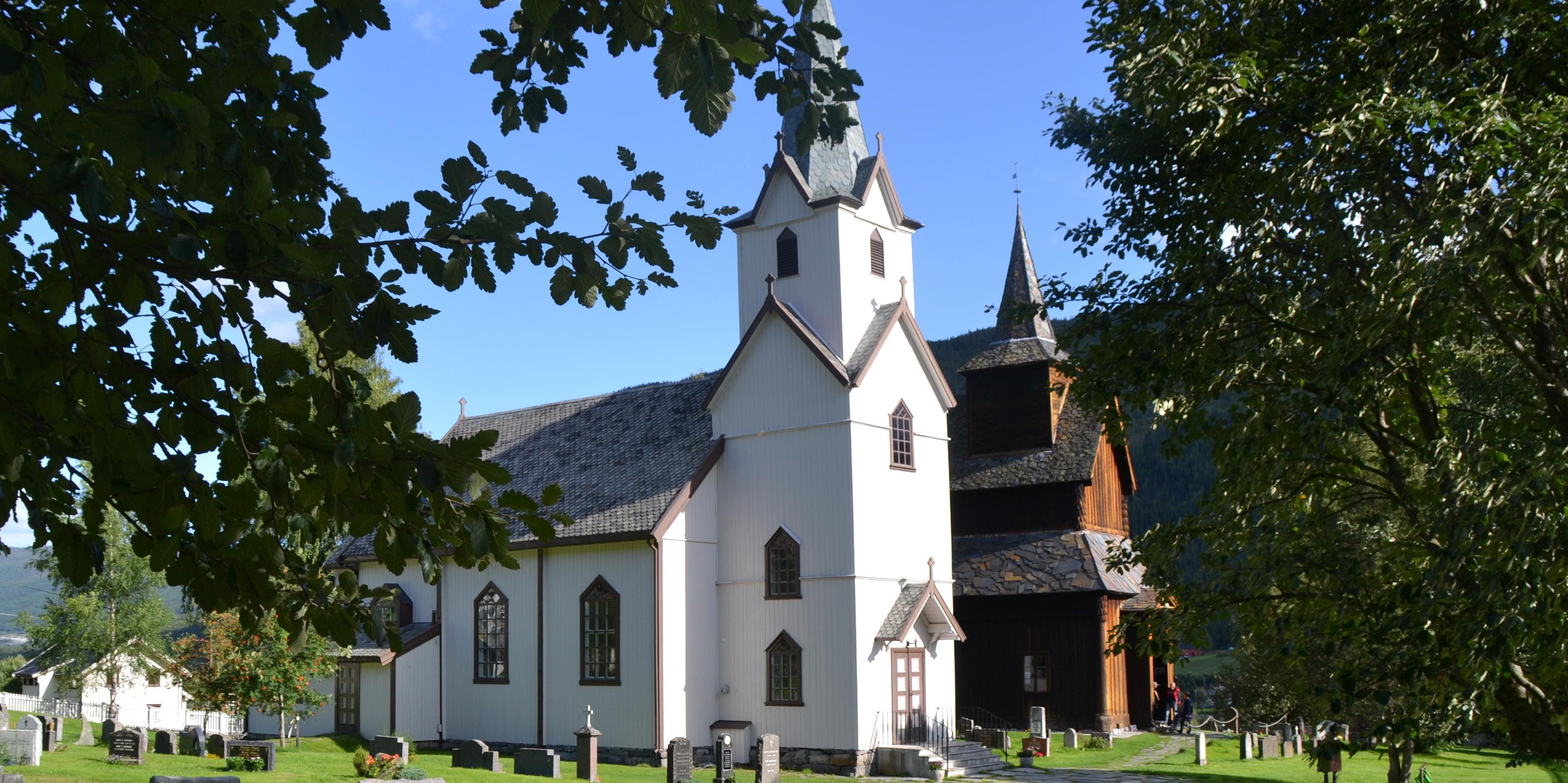
Uvdal Stave Church, as it stands today, does not have its original appearance but is a result of steady expansion and modifications until the 1800s. Each century has added something to it, and so the Church has become a beautiful and quaint example of how building style and decoration from several periods may merge into a rich and harmonious whole. In 1978, excavations were conducted in Uvdal Stave Church. One found among other items over 500 coins beneath the floor. From these we can conclude that the church was probably built at the end of the 12th century. Another interesting discovery was distinct holes in the ground made by pillars from an even older building, that also probably being a church. In one of these holes were two coins from the beginning of the same century, which may indicate the age of the first church. We do not know how this church might have looked or indeed its size. Facilities: Church Distance: 7.4 km. Location: Rødberg Time: 7 min. / car



Approfitta delle migliori offerte
Ecco una selezione di operatori per organizzare al meglio il tuo viaggio.
 Brim ExplorerTour silenziosi sui fiordi a bordo di premiati catamarani elettrici a Oslo, Tromsø, alle Lofoten e alle Svalbard.
 CityboxHotel moderni e convenienti in posizione centrale a Oslo, Bergen e Kristiansand.
 NorgesbookingBoka en perfekt stuga bland Norges fjordar, fjäll och dalar.
 Scandic HotelsSperimenta il meglio dell’ospitalità degli hotel nordici in più di 90 hotel in tutta la Norvegia. Sono disponibili offerte speciali.
 StrawberryUna compagnia alberghiera diversa! Cerca le nostre fantastiche offerte per il weekend in oltre 100 hotel in Norvegia.
 Thon Hotels ASFantastica colazione inclusa! Prova il vero comfort e le tariffe convenienti nei nostri 80 hotel in Norvegia.
 CampcationDormi in un hotel di ghiaccio, vai a caccia dell’aurora boreale e scopri i magici fiordi. Prenota ora il tuo tour!
 Classic Norway HotelsQuando la destinazione è l’hotel. Prenota una notte da ricordare in uno degli hotel più unici e caratteristici della Norvegia.
 50 Degrees North NordicScegli tra indimenticabili viaggi individuali su misura e tour esclusivi per piccoli gruppi in Norvegia.
 Radisson HotelsOfferte molto convenienti e pernottamento confortevole e di qualità nelle principali città, aeroporti e località sciistiche della Norvegia.
 Authentic ScandinaviaViaggi curati da persone del posto. I nostri tour su misura soddisfano ogni tipo di viaggiatore e ogni budget.
 Booknordics.comPacchetti vacanze unici, hotel avventura, tour e attività.
 Fjord ToursAbbiamo creato Norway in a Nutshell, il tour più popolare della Norvegia. Fiordi, montagne e mete spettacolari — tutto in un solo viaggio!
 Go FjordsPrenota tour ed esperienze fantastiche! Offriamo tour a Oslo, Bergen, Stavanger, Lofoten, Capo Nord e altre località.
 HurtigrutenVivi l’esperienza del viaggio per mare più bello del mondo con una indimenticabile crociera lungo la stupenda costa della Norvegia.
 Norrøna AdventurePreparati a spedizioni e viaggi avventura con Norrøna Adventure. Escursionismo, sci e tour in bicicletta.
 Discover NorwayOffre un’ampia gamma di vacanze entusiasmanti con tour indipendenti di escursionismo, bicicletta e sci in Norvegia. Incluso il trasporto del bagaglio.
 Norwegian HolidaysPacchetti vacanze a prezzi convenienti con Norwegian. Prenota voli, hotel e noleggio auto tutto nello stesso posto.
 StrömmaSightseeing in pullman e battello in numerose delle principali località turistiche e città della Norvegia.
 Up NorwayLusso su misura scelto personalmente da esperti del luogo. Uniamo le tue preferenze e la nostra conoscenza per creare un viaggio indimenticabile.
 Fjord Travel NorwayDormi in un hotel di ghiaccio, vai a caccia dell’aurora boreale e scopri i magici fiordi. Prenota ora il tuo tour!
 Arctic Campers ASVuoi provare la vita da camperista? Esplora la Norvegia comodamente e con stile con i nostri camper funzionali e accoglienti.
 Auto EuropeUn’esperienza sempre piacevole di noleggio auto. Cerca e confronta le tariffe di noleggio. Cancellazione gratuita fino a 24 ore prima del ritiro.
 NOR-WAY BussekspressAmmira gli splendidi panorami con un comodo viaggio in pullman verso i fiordi e da una città all’altra sui nostri pullman express.
 Rent-A-Wreck of Scandinavia ASL’alternativa intelligente e vantaggiosa per il noleggio auto.
 SJ NordSJ NORD – l’avventura inizia sul treno
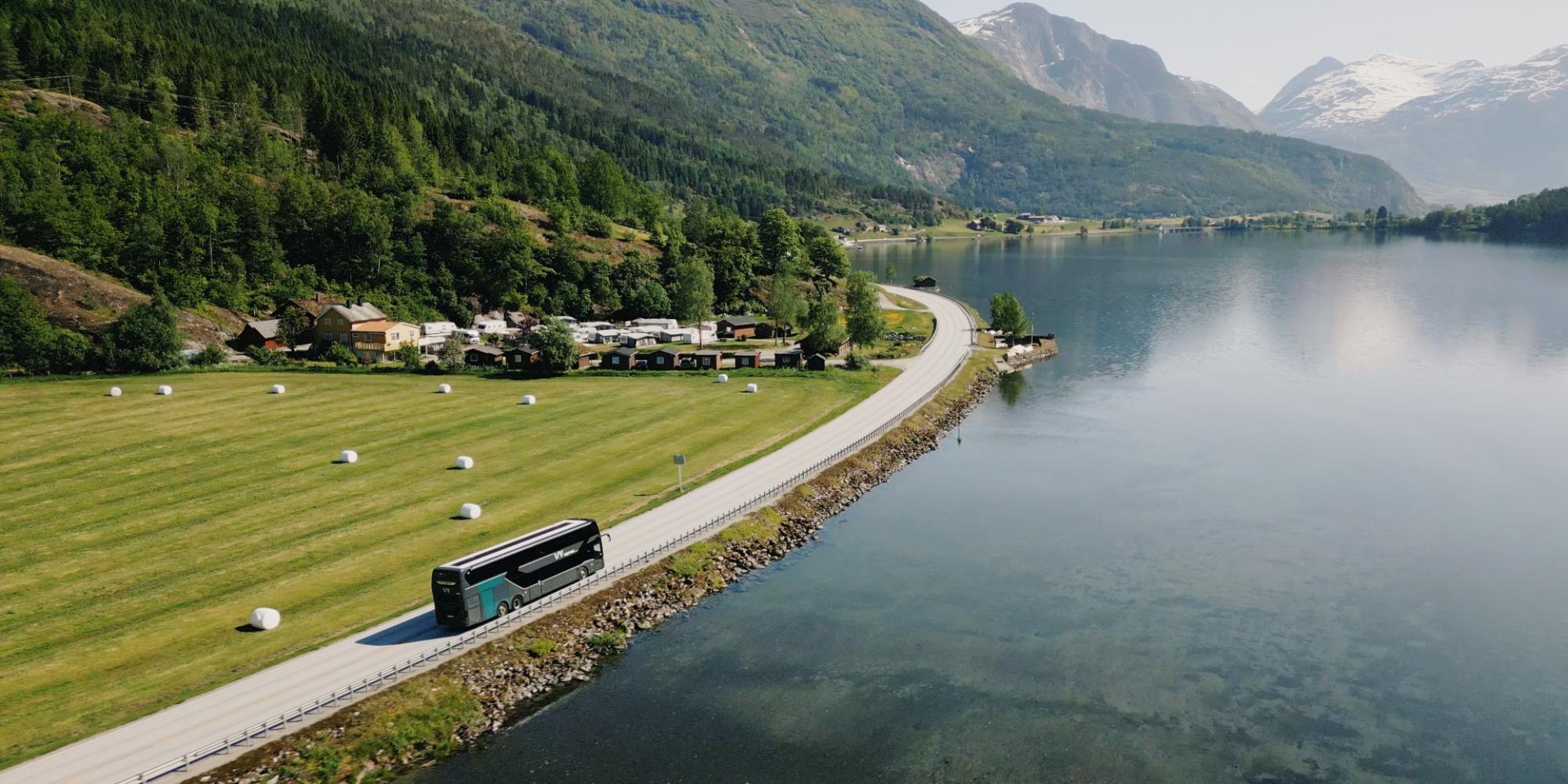 Vy expressScopri la Norvegia a bordo di confortevoli pullman express che ti portano nelle maggiori città, sulle montagne e nei fiordi.
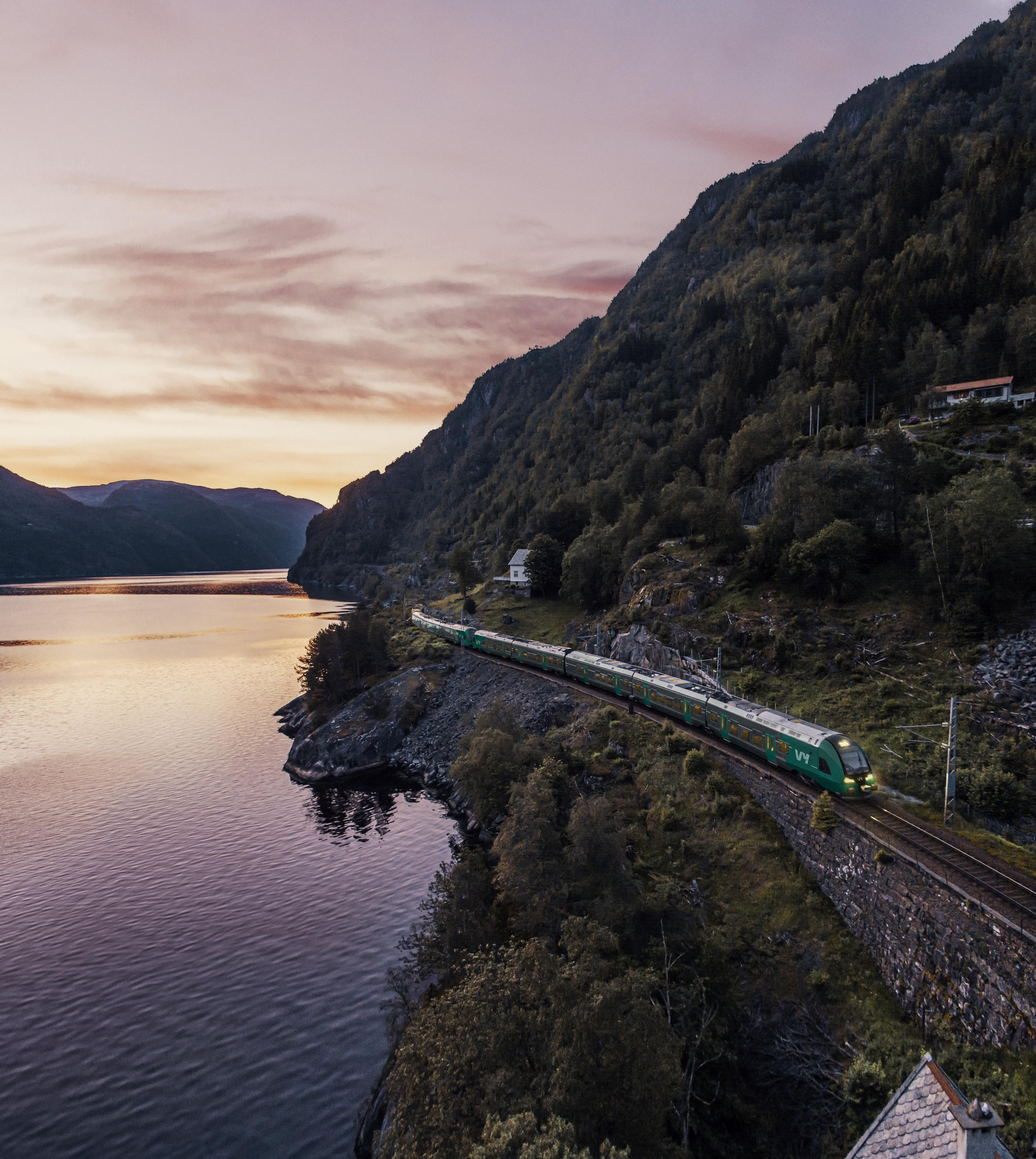 Vy TrainScivola in treno attraverso i paesaggi tra Oslo e Bergen sulla Ferrovia di Bergen e vai alla scoperta della vasta regione intorno a Oslo.
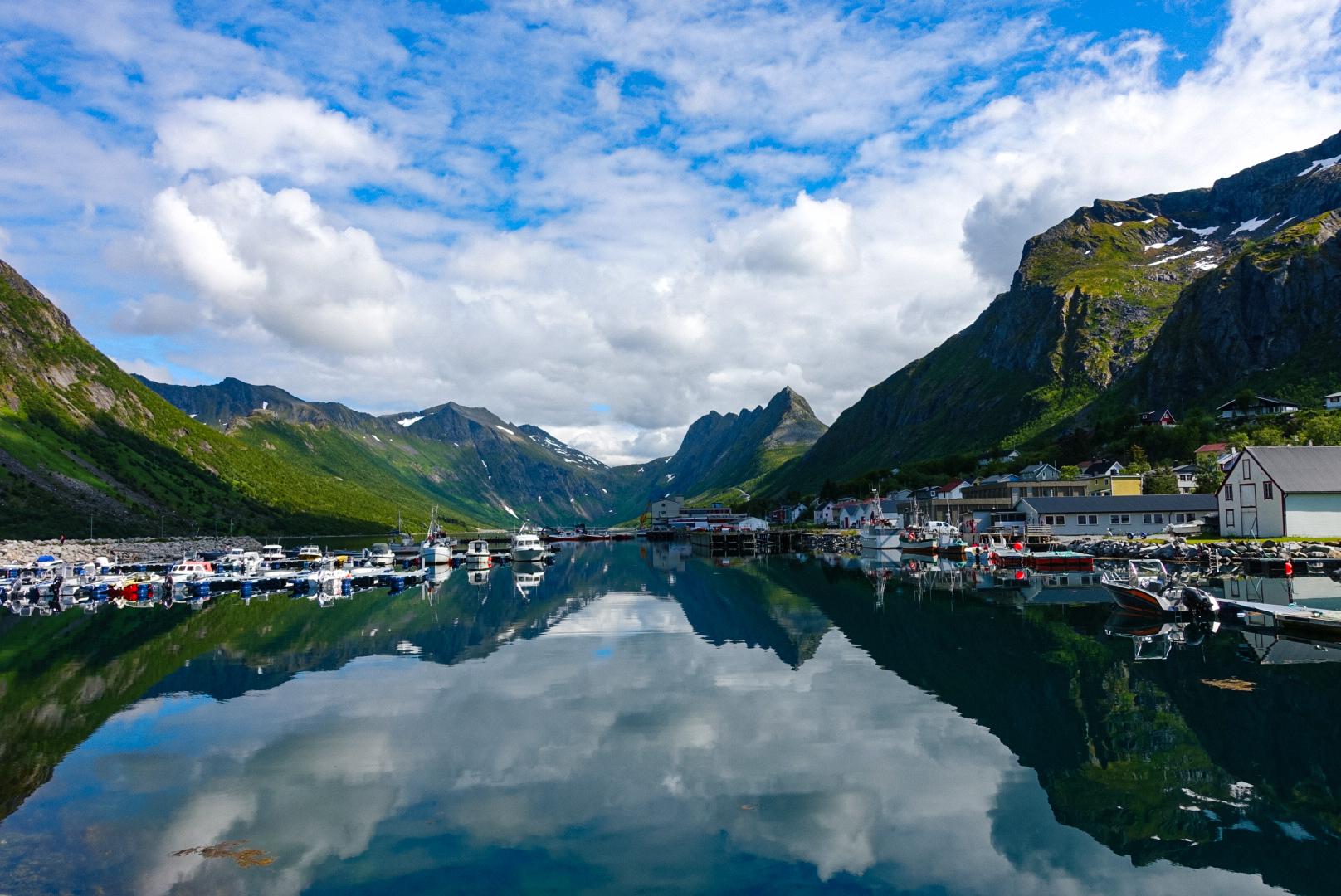 My Nordic TravelScegli tra itinerari fai da te e pacchetti vacanze nelle destinazioni più belle della Norvegia.
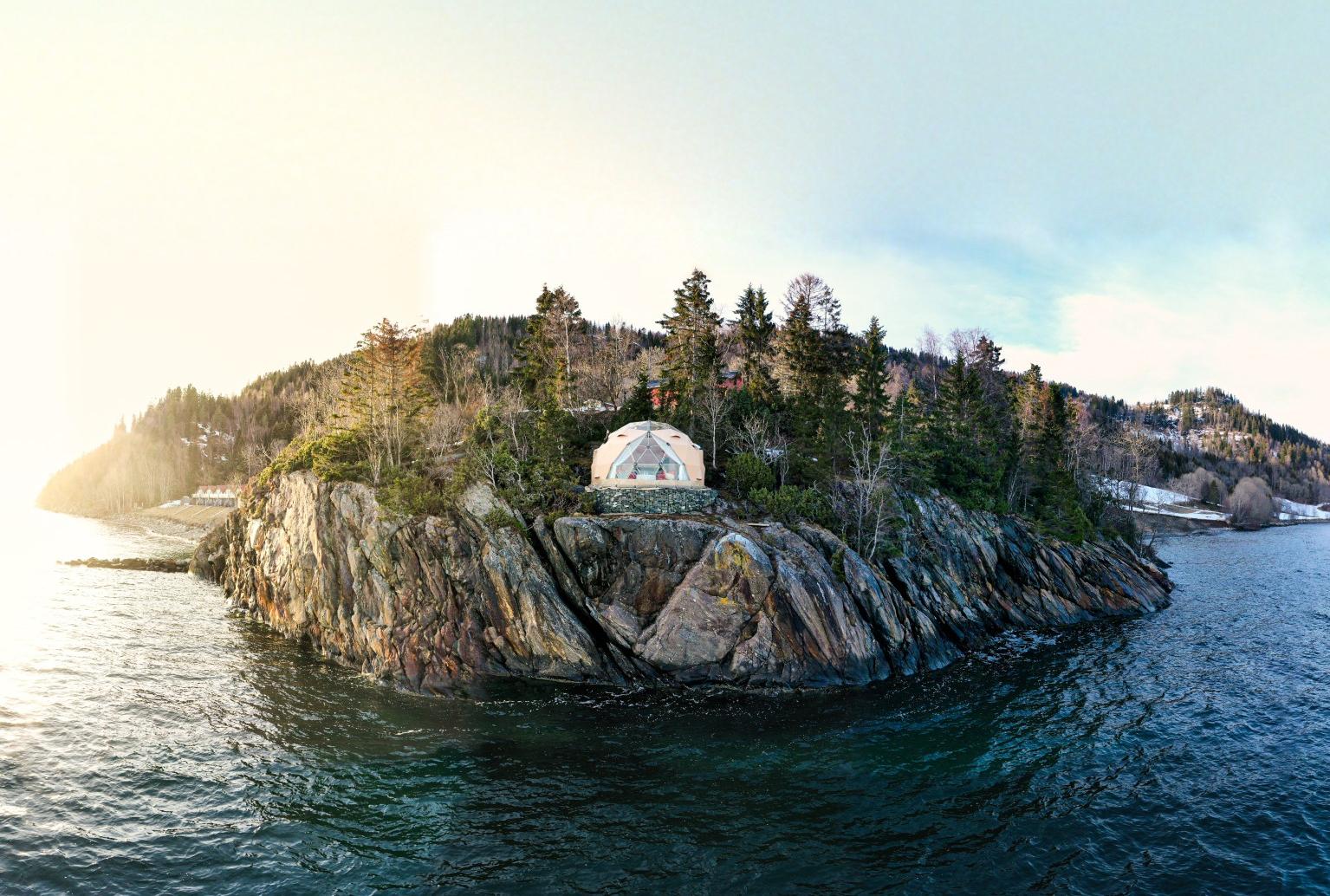 CampanyonCampeggi unici nella natura. Prenota il pernottamento in una casa sugli alberi o in una tenda glamping o affitta una piazzola per camper.
 NorwegianNorwegian offre voli economici in Norvegia e voli diretti da più di 70 aeroporti europei. Prenota i voli per la tua destinazione tramite il nostro calendario con le migliori offerte.
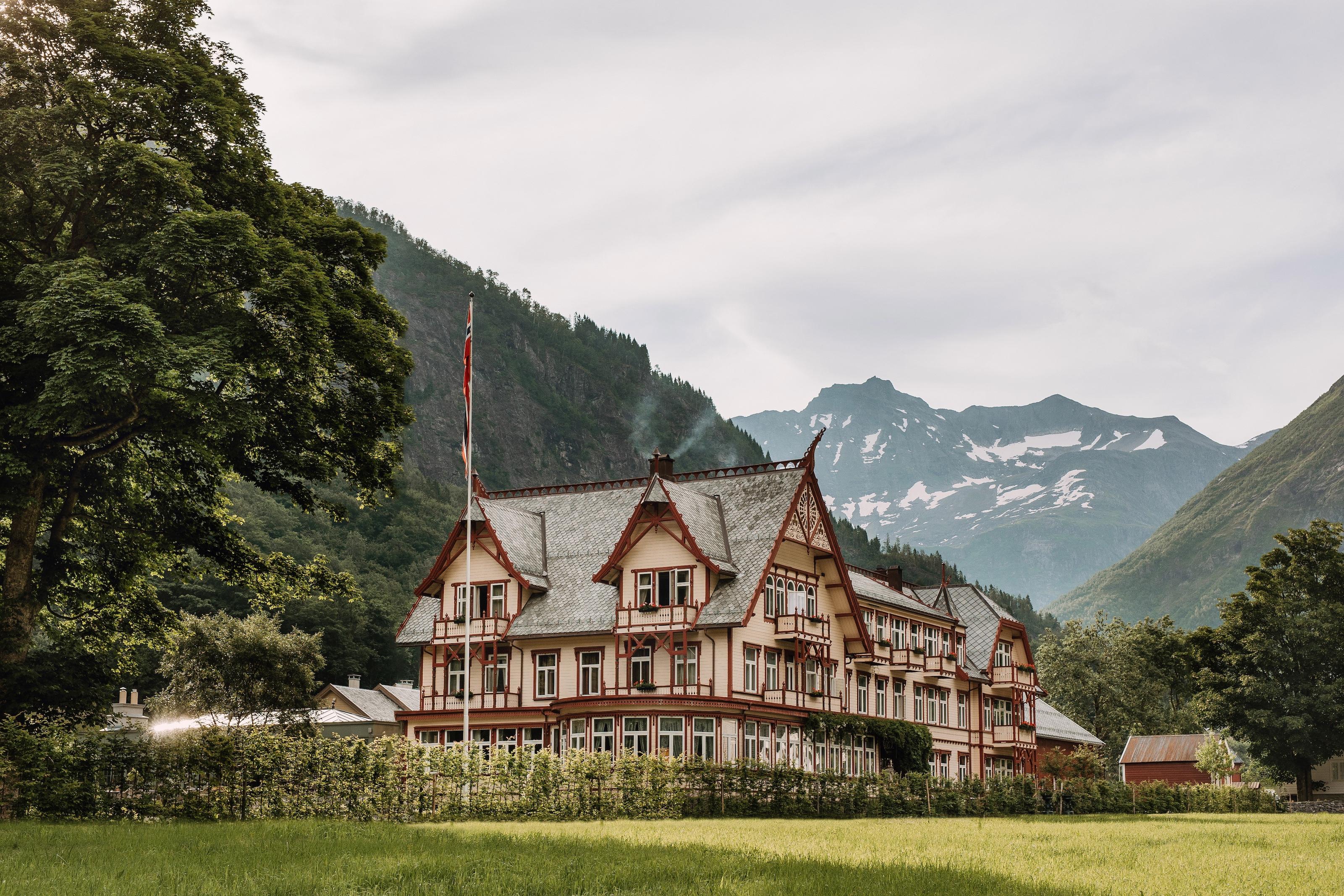 De HistoriskeVivi un soggiorno indimenticabile in uno degli hotel storici, unici e autentici, della Norvegia. Goditi esperienze culinarie di qualità e un’ampia scelta di attività.
 CampioIl maggior sito di prenotazione campeggi della Norvegia. Trova i migliori campeggi e piazzole per camper in tutta la Norvegia.
 Benzini CampersL’avventura della tua vita inizia qui. Prenota adesso un camper van con Benzini Campers.